
Perimenopause Fatigue: Why It Happens and How Nutrition Helps

There’s normal tired, and then there’s perimenopause tired. Normal tired lines up with what you did that day, the sleep you got, the energy you exerted. But perimenopause tired? That shows up after 8 hours of sleep, after a relaxed weekend, after a vacation. Many women in their 40s describe this as feeling like their battery never quite charges, no matter how much they sleep. This is not all in your head: perimenopause produces a specific energy and fatigue pattern through several biological pathways, and several of them respond directly to nutrition, sleep, and a focused bloodwork review. This article walks through why it happens, and what levers you can pull to actually help.
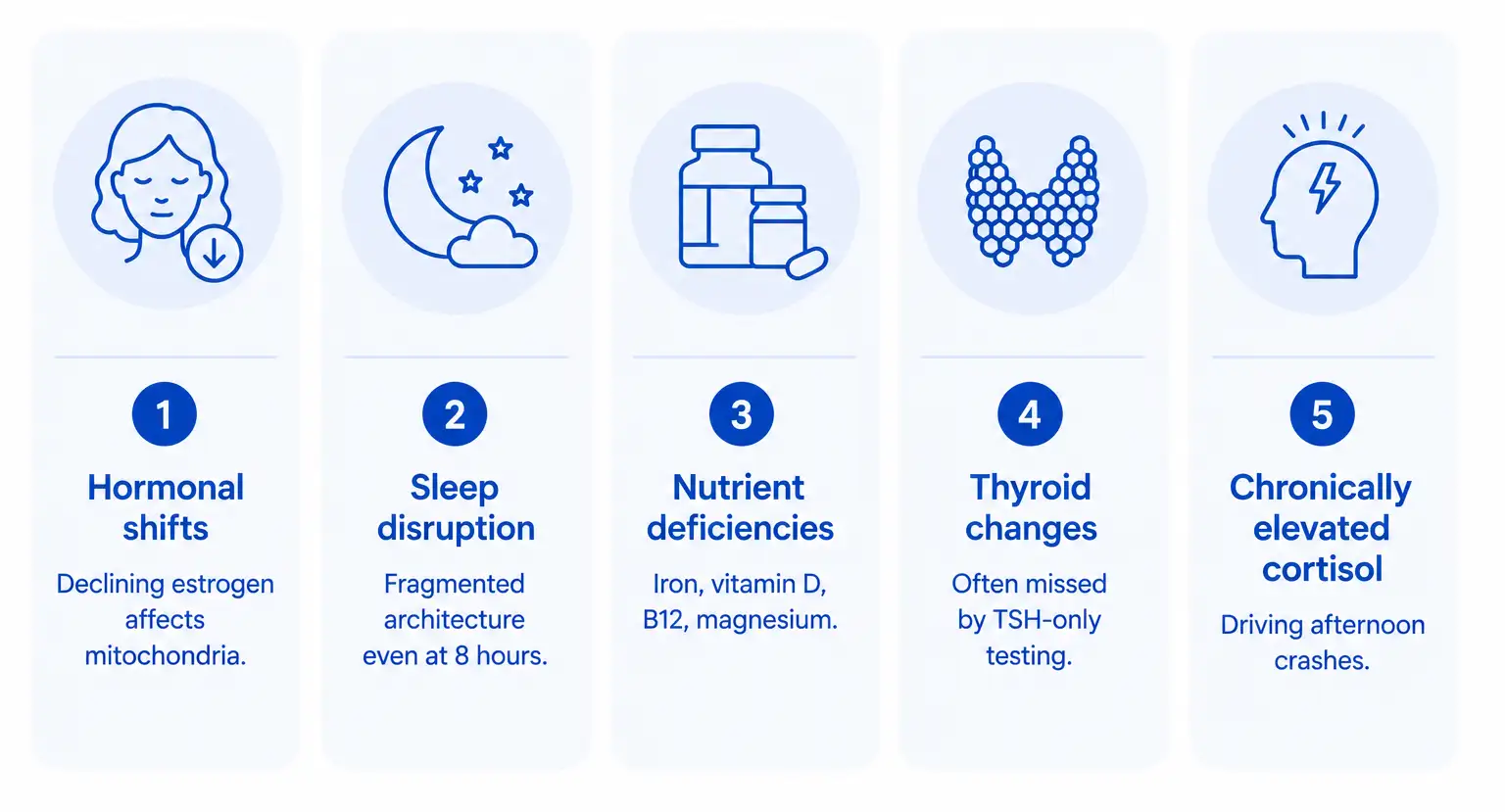
Here’s the short version. Perimenopause fatigue is multifactorial: it’s related to declining estrogen and progesterone, disrupted sleep, common nutrient deficiencies (iron, vitamin D, B12, magnesium), thyroid changes that often go unflagged, and chronically elevated cortisol. The bloodwork to ask for? A full iron panel including ferritin, vitamin D, B12, TSH plus free T3 and free T4, A1C, and lipids. And these nutrition interventions produce the fastest energy improvement: protein at every meal, addressing iron and B12 if deficient, vitamin D supplementation, and reducing alcohol.
Tired in a way that does not match your sleep?
Book a free 15-minute consult with our Winnipeg menopause coaching team. We'll build a plan that addresses the underlying drivers of perimenopause fatigue and confirm your insurance coverage on the call.

Why Perimenopause Causes Fatigue
1. Hormonal shifts
Declining estrogen affects mitochondrial function (the cellular energy machinery). Declining progesterone affects sleep quality, which compounds daytime fatigue. The fluctuation itself, not just the eventual decline, drains your energy: the body is constantly recalibrating to changing hormone levels rather than running on a stable platform.
2. Sleep disruption
Even when total sleep time is adequate, perimenopause often fragments sleep architecture. And less deep sleep and less REM sleep = less restorative recovery. Many women in perimenopause sleep 8 hours but wake feeling like they slept 5. This is a sleep quality issue, not quantity.
www.gfitwellness.ca/blog/sleep-and-perimenopause-weight-gain
3. Common nutrient deficiencies
Several deficiencies become more common in perimenopause and are direct contributors to fatigue:
- Iron deficiency, especially in women with heavy or prolonged perimenopausal periods. This is the most missed deficiency in this life stage.
- Vitamin D deficiency, especially in October to March in Winnipeg.
- B12 deficiency, common in women on certain medications (metformin, PPIs) or with restricted diets.
- Magnesium deficiency, common across the general population but often more symptomatic in perimenopausal women.
4. Thyroid changes
Subclinical hypothyroidism is more common in perimenopausal women and often goes undetected. Standard TSH-only thyroid testing misses many cases. A full thyroid panel (TSH, free T3, free T4, thyroid antibodies) is worth requesting if fatigue is persistent.
5. Chronically elevated cortisol
The same cortisol pattern that drives weight changes drives fatigue. Cortisol that stays elevated overnight disrupts the morning energy curve. The afternoon crash that many perimenopausal women describe is a cortisol pattern.
The Bloodwork to Ask For
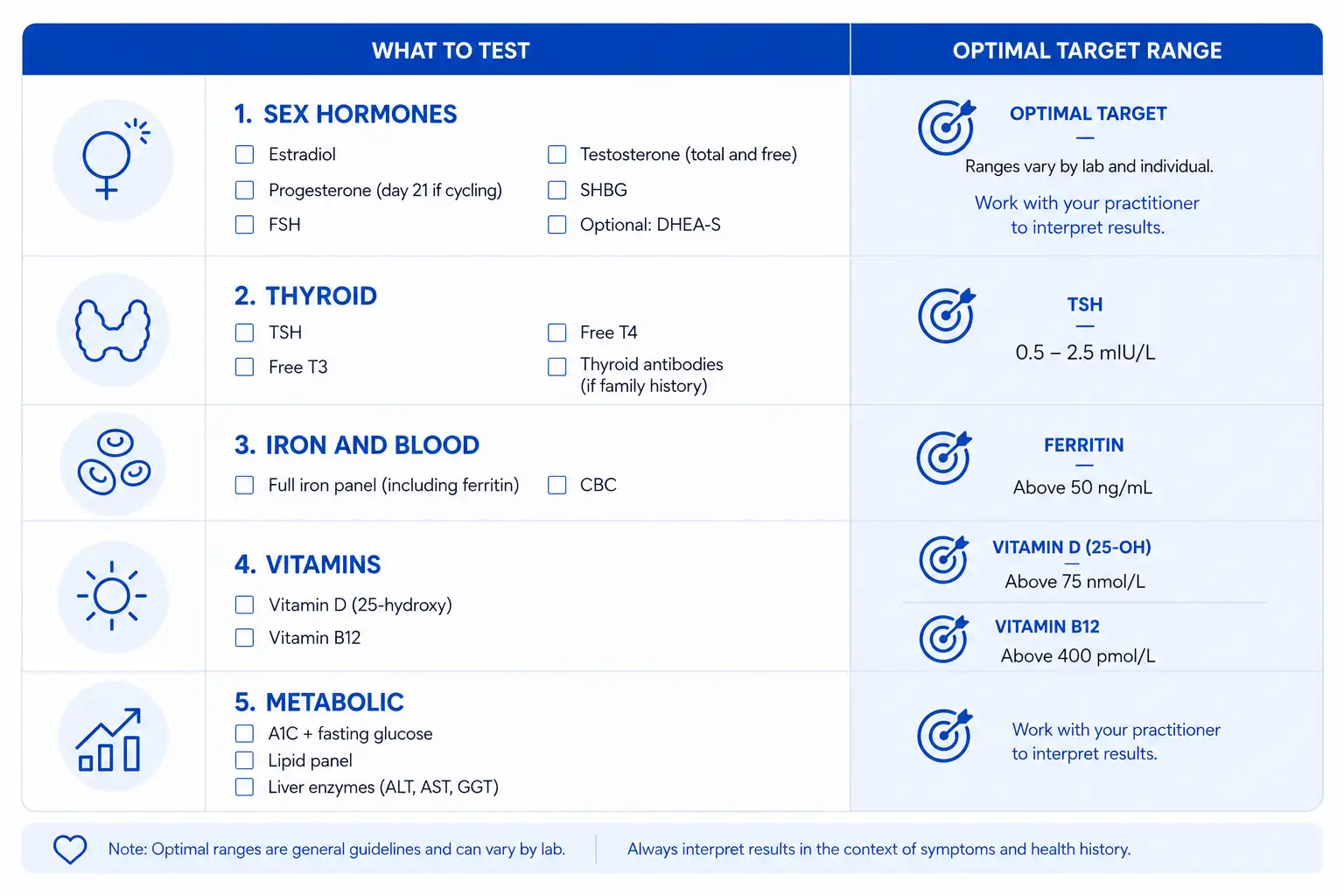
Most family physicians in Manitoba will run all of these when asked. Bring this list to your appointment:
Sex hormones (perimenopause-specific):
- Estradiol. Directly affects mitochondrial energy production. Fluctuates widely in perimenopause but still valuable to measure
- Progesterone. If you are still cycling, ideally drawn around day 21 of your cycle. Declining progesterone drives sleep disruption and fatigue.
- FSH. Elevated FSH is one signal of perimenopause, though it fluctuates
- Testosterone (total and free). Women's testosterone declines with age and directly affects energy, muscle, and libido. One of the most under-tested markers when women present with fatigue.
- SHBG (sex hormone binding globulin). Helps interpret testosterone by showing how much is bound vs free.
- Optional: DHEA-S. Precursor to sex hormones, useful for a full picture.
Thyroid:
- TSH plus free T3 and free T4. Thyroid antibodies if family history of thyroid disease.
Iron and blood
- Full iron panel: serum iron, total iron-binding capacity (TIBC), transferrin saturation, ferritin. Ferritin specifically, often missed if only iron is ordered.
- Complete blood count (CBC).
Vitamins:
- Vitamin D (25-hydroxy).
- B12.
Metabolic:
- A1C and fasting glucose.
- Lipid panel
- Liver enzymes (ALT, AST).
Optimal ranges to know about:
- Ferritin: above 50 ng/mL for energy, ideally above 70. Many lab reports flag deficiency only below 15 to 30.
- Vitamin D: above 75 nmol/L. Most Winnipeg women in winter sit below this without supplementation
- B12: above 400 pmol/L, ideally above 500.
- TSH: 0.5 to 2.5 mIU/L is considered optimal in many functional medicine frameworks, though standard reference ranges go higher.
- Estradiol, progesterone, and testosterone: reference ranges vary based on cycle timing and menopause stage. Discuss with your naturopath or physician for what is optimal for you.
"Most clients come in thinking they need a stronger diet or more discipline when they actually need their ferritin and vitamin D measured. I’ve seen years of fatigue resolve in weeks once those two numbers were corrected."April Klippenstein, GFIT Coach (Certified Menopause Coaching Specialist)
Nutrition Interventions That Lift Energy
1. Protein at every meal
Adequate protein supports stable blood sugar, which prevents the energy crashes that hollow out perimenopausal afternoons. Aim for 30 to 40 grams of protein at breakfast specifically. Most perimenopausal women eat their lowest protein meal first thing in the morning, which sets the tone for the day's energy.
2. Address iron deficiency if present
If ferritin is below 50, iron supplementation under medical guidance is often transformative for energy. Heme iron from red meat, dark poultry, and organ meats is best absorbed. Plant-source iron (lentils, spinach, fortified cereals) is less well absorbed, and benefits from pairing with vitamin C. Iron supplements (ferrous bisglycinate is best tolerated) typically work but should be discussed with your physician.
3. Vitamin D supplementation
Most adults in Manitoba benefit from 1,000 to 2,000 IU of vitamin D3 daily from October through March. If your level is below 50 nmol/L, higher doses (3,000 to 5,000 IU) for a few months may be appropriate under medical guidance to restore the level, then maintain at 1,000 to 2,000 IU.
4. Reduce alcohol
Alcohol is one of the most common contributors to perimenopausal fatigue and one of the most underappreciated. Even moderate drinking disrupts sleep architecture for 2 to 3 nights and raises overnight cortisol. Reducing to 2 to 3 drinks per week or less typically produces noticeable energy improvement within 2 weeks.
5. Stable carbohydrates at lunch and dinner
Complex carbohydrates (sweet potato, quinoa, beans, oats) at midday and evening meals support steady afternoon and evening energy. Very low-carb diets, while effective for some women, often worsen perimenopausal fatigue and should be approached carefully in this life stage.
6. Caffeine timing
Caffeine itself is generally fine in perimenopause. The timing of your intake actually matters more than anything. Stopping caffeine at noon allows it to clear sufficiently before sleep. Caffeine half-life lengthens in perimenopausal women, making afternoon caffeine more disruptive than it used to be.
www.gfitwellness.ca/online-nutrition-coaching-winnipeg
When Nutrition Alone Is Not Enough
If you have addressed sleep, nutrition, alcohol, and the common deficiencies, and fatigue persists, here are three follow-up considerations:
- A more thorough medical workup with your physician. Persistent fatigue with normal basic bloodwork warrants further investigation (sleep apnea evaluation, more detailed thyroid workup, inflammatory markers, sometimes autoimmune screening).
- HRT discussion. For women whose fatigue is clearly tied to perimenopausal symptoms (sleep disruption, vasomotor symptoms, mood changes), HRT can be transformative.
www.gfitwellness.ca/blog/hrt-and-weight-loss - Mental health assessment. Depression and anxiety often present primarily as fatigue in perimenopause and respond to specific treatment beyond the nutrition and lifestyle layer.
One of our Winnipeg clients, Cathy, had been exhausted for 18 months at 48. Her doctor had run basic bloodwork (TSH only on the thyroid side) and pronounced everything normal. We encouraged her to request the full panel including ferritin, vitamin D, B12, and free T3/T4. Her ferritin was 18 and her vitamin D was 32 nmol/L. With iron supplementation and high-dose vitamin D for 3 months, plus the nutrition changes above, her energy returned. The fatigue had a legit cause; it’s just that nobody had looked for it.
Tired in a way that does not match your sleep?
Book a free 15-minute consult with our Winnipeg menopause coaching team. We'll help you assemble the picture you bring to your physician and build a nutrition plan to address it. We'll confirm your insurance coverage on the call.
Frequently Asked Questions
Perimenopause fatigue is multifactorial: declining estrogen and progesterone, disrupted sleep architecture, common nutrient deficiencies (iron, vitamin D, B12), thyroid changes often missed by standard testing, and chronically elevated cortisol. The fatigue is real and biological, not a willpower issue. Addressing the underlying drivers, especially the bloodwork-detectable ones, often produces meaningful improvement within 4 to 12 weeks.
After bloodwork to identify specific deficiencies: most women in Manitoba benefit from 1,000 to 2,000 IU vitamin D daily October through March. Iron supplementation if ferritin is below 50. B12 supplementation if levels are below 400. Magnesium glycinate 200 to 400 mg before bed for sleep support.
Yes, and request a full panel (TSH, free T3, free T4) rather than TSH alone. Subclinical hypothyroidism is more common in perimenopausal women and often goes undetected when only TSH is measured. Thyroid antibodies are worth adding if you have a family history of thyroid disease.
Yes, and it is one of the most common and most missed causes. Many perimenopausal women have heavy or prolonged periods that deplete iron stores. Ferritin (the storage form of iron) is the most sensitive marker and is often not included in standard bloodwork unless specifically requested. Optimal ferritin for energy is above 50 ng/mL, ideally above 70.
HRT is not a weight loss drug, and most studies show it produces modest direct effects on weight. The bigger effect is indirect: HRT often improves sleep, mood, hot flashes, and energy, all of which make it dramatically easier to follow a sustainable weight loss plan. The decision to start HRT is between you and your physician based on your full symptom picture, not just weight.





Book a call with our Wellness Coordinator to learn more


