
Sleep and Perimenopause Weight Gain: The Hidden Link

So it’s 3 am. Again. The same time as last night, the night before, and, come to think of it, most of the nights for the last two months. You lie there for 90 minutes wondering if you should get up, take a sleeping pill or just try and push through. By 6 am you’re exhausted. By 10 you’re ravenous. And the scale is creeping up, despite no obvious changes to your eating. If this is you, know that you’re not alone. Perimenopause impacts both your sleep and your weight - and there are things we can do to help. This article explains the science behind it and what actually fixes it.
The short version? Perimenopause disrupts sleep through three pathways: declining progesterone (the sleep-supporting hormone), declining estrogen (which affects vasomotor regulation and the 3 am cortisol pattern), and vasomotor symptoms (hot flashes and night sweats). Disrupted sleep then drives weight gain through hormonal effects on appetite, glucose tolerance, and cortisol. Fixing your sleep often does just as much for your weight as fixing your diet does. This article walks you through the 14-day reset we use with our clients.
Sleep gone sideways and weight following?
Book a free 15-minute consult with our Winnipeg menopause coaching team. We'll map your sleep pattern, build a targeted reset, and confirm your insurance coverage on the call.

Why Perimenopause Disrupts Sleep
Declining progesterone
Progesterone is the body's natural sleep hormone. It has a calming, sedating effect through its action on GABA receptors. As progesterone declines in perimenopause, your natural sleep drive weakens. Many women describe feeling “tired but wired” at bedtime. That is largely due to the progesterone shift.
Declining estrogen
Estrogen plays a role in thermoregulation and serotonin function, both of which affect sleep. As estrogen drops, your body temperature regulation becomes less stable (hello, hot flashes and night sweats), and the brain becomes more reactive to cortisol spikes. The 3 am wakeup pattern many perimenopausal women describe is largely an estrogen-mediated cortisol pattern.
Vasomotor symptoms
Many women have hot flashes they are not aware of during the night; what you might notice, though, is repeatedly waking up in the early morning hours without an obvious cause. Sleep tracking often reveals this pattern.
Why Disrupted Sleep Drives Weight Gain
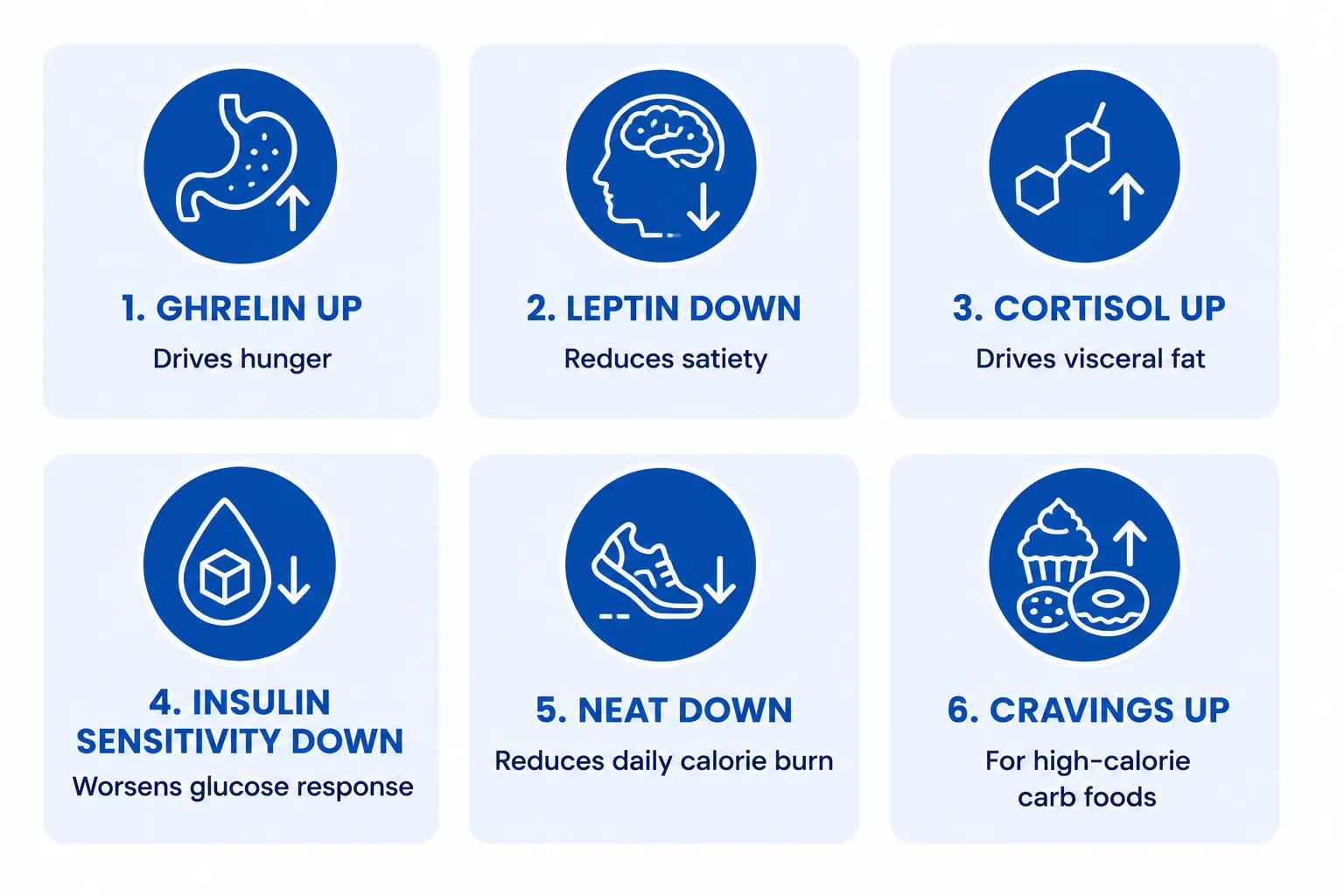
Sleep is not a passive activity; it’s when the body performs hormonal regulation that directly affects body composition. Disrupted sleep has measurable, repeatable effects:
- Ghrelin (the hunger hormone) rises with sleep loss. Even one night of sleep deprivation can elevate ghrelin and increase your next-day caloric intake by 200 to 400 calories.
- Leptin (the satiety hormone) falls with sleep loss, so the same meal feels less satisfying after a night of poor sleep.
- Cortisol rises with sleep disruption; higher cortisol drives visceral fat storage and breaks down muscle tissue.
- Insulin sensitivity declines: the same carbohydrate meal produces a larger blood glucose response after poor sleep.
- NEAT (non-exercise activity) drops. Tired bodies move less, often imperceptibly.
- Cravings for high-calorie, high-carb foods increase because the brain seeks quick fuel when it has not recovered overnight.
Stack these across weeks or months of disrupted sleep and the cumulative effect on weight is enormous. Many of our perimenopausal clients have spent years fixing their diet without addressing sleep and watching the scale climb anyway. Fixing sleep first often makes the dietary work suddenly start working.
"In perimenopause, sleep is the foundation. If sleep is a mess, no diet works. I’ve seen countless clients who were doing ‘everything right’ in terms of diet and exercise, where fixing their sleep was the missing piece." April Klippenstein, GFIT Coach (Certified Menopause Coaching Specialist)
The GFIT 14-Day Perimenopause Sleep Reset
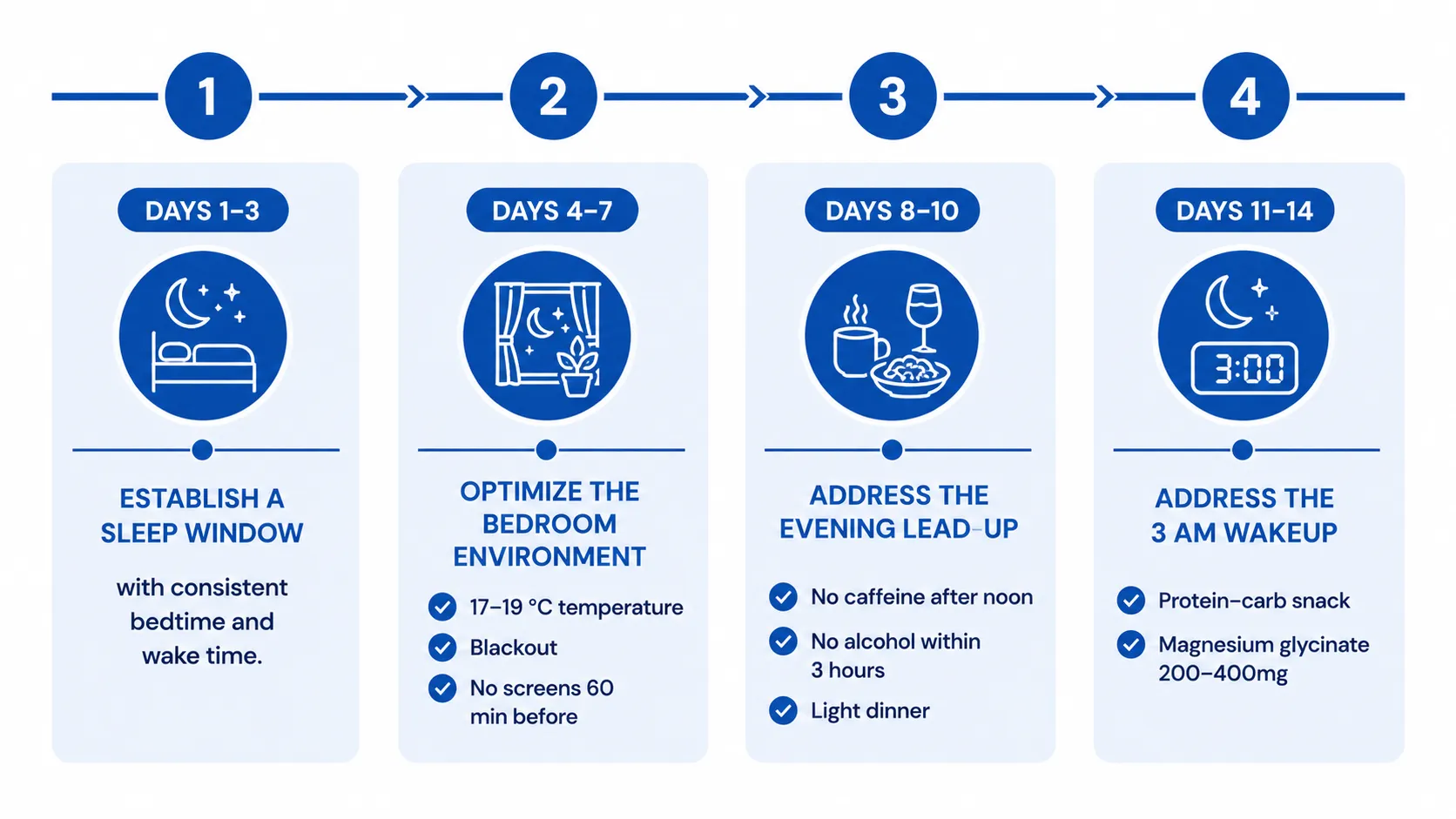
If this is resonating with you, here’s your next move: run the GFIT 14-Day Perimenopause Sleep Reset and try it before considering medication or supplementation. We use it with every perimenopausal client and get great results.
Days 1 to 3: Establish a sleep window
Pick a consistent bedtime and wake time. Stick to both within 30 minutes, including weekends. Most women in perimenopause sleep best with an earlier bedtime (10 to 11 pm) and 7 to 9 hours in bed.
Days 4 to 7: Optimize the bedroom environment
- Bedroom temperature: 17 to 19 °C (63 to 66 °F). Cooler is better for perimenopausal women.
- Blackout the room. Even small light sources disrupt sleep architecture.
- No screens within 60 minutes of bed. Or use blue-light filtering if absolutely necessary.
- Lighter bedding. Heavy duvets worsen night sweats.
- Consider moisture-wicking pyjamas if night sweats are frequent.
Days 8 to 10: Address the evening lead-up
- No caffeine after noon. Even one afternoon coffee can disrupt sleep onset 8 hours later.
- No alcohol within 3 hours of bed. Alcohol disrupts sleep architecture even when it appears to help you fall asleep.
- Light dinner 3 hours before bed. Heavy late dinners worsen sleep in perimenopausal women.
- 10-minute wind-down: dim lights, no screens, consider light reading or stretching.
Days 11 to 14: Address the 3 am wakeup specifically
If you are waking at 3 am consistently, the most likely cause is a wonky cortisol pattern. Two interventions that can help:
- Have a protein and complex carb snack 1 hour before bed (a small bowl of Greek yogurt with berries works for most clients). This stabilizes overnight blood sugar and reduces the cortisol surge.
- Add magnesium glycinate, 200 to 400 mg, 30 minutes before bed. Magnesium supports GABA function (and many perimenopausal women are deficient). Discuss with your physician if you take other medications.
If after 14 days the sleep has not meaningfully improved, that is when you bring in a coach or have the medical conversation with your physician. HRT specifically can be transformative for perimenopausal sleep when symptoms are severe.
What Does Not Work (And Why)
- Sleeping pills as a long-term solution. They suppress some symptoms but disrupt sleep architecture and create dependence. While they can be useful as a short bridge during the acute phase, they’re not a 12-month plan.
- Melatonin in large doses. 0.3 to 1 mg can help with sleep onset; 5 to 10 mg (the typical drugstore dose) often worsens sleep quality and morning grogginess.
- CBD and cannabis. This can be helpful for some women, but is problematic for others. It has variable effects on sleep architecture. Iit may be worth trying carefully, only if other interventions have failed.
- Drinking more water before bed increases the number of overnight wake-ups for urination.
- Heavy late workouts. Evening high-intensity exercise raises cortisol and core temperature, both of which worsen sleep onset in perimenopausal women.
www.gfitwellness.ca/perimenopause-menopause-weight-loss-coaching-winnipeg
When to Bring in a Coach (And When to See a Doctor)
A coach helps with the behavioural and lifestyle changes that respond to perimenopausal sleep disruption. A physician handles the medical interventions: HRT, evaluation for sleep apnea (which becomes more common in perimenopause), and management of any underlying conditions.
Bring in a coach when:
- You have run the 14-day reset honestly and want a more individualized plan.
- Sleep, weight, and energy are intertwined and need a coordinated approach.
See a physician when:
- Sleep disruption is severe and interferes with daily function.
- You suspect sleep apnea (loud snoring, witnessed pauses in breathing, severe daytime sleepiness).
- You are considering HRT specifically for sleep symptoms.
- Anxiety or low mood is also present and may be driving the sleep disruption.
One of our Winnipeg clients, Maria, had been waking at 3:15 am almost nightly for six months. Her doctor offered sleeping pills, but under the advice of her coach, she started with the 14-day reset before filling the prescription. By day 10, she was sleeping through to 5:30 am. By week 4, she was sleeping until 6:30 most nights. Six months later, her weight had dropped 8 pounds without any change to her diet. The sleep fix did most of the work, and she was thrilled.
Ready to fix your sleep and watch your weight follow?
Book a free 15-minute consult with our Winnipeg coaching team. We'll review your sleep pattern, recommend the right intervention sequence, and confirm your insurance coverage on the call.
Frequently Asked Questions
The 3 am wakeup pattern in perimenopause is almost always a cortisol pattern, driven by declining estrogen and blood sugar fluctuation overnight. The fix typically combines a small protein and carbohydrate snack 1 hour before bed, magnesium supplementation, a consistent bedtime, and a cool bedroom. If the pattern persists after 4 weeks of these interventions, HRT becomes worth considering with your physician.
Disrupted sleep elevates ghrelin (hunger hormone), suppresses leptin (satiety hormone), raises cortisol, decreases insulin sensitivity, drops NEAT (non-exercise activity), and increases cravings for high-calorie foods. The combined effect can add 300 to 600 calories of daily intake, plus reduce daily expenditure by 100 to 300 calories, even when nothing about the diet has consciously changed. For the fuller biological picture, see our article on why weight loss gets harder during menopause.
Low-dose melatonin (0.3 to 1 mg) can help with sleep onset for some perimenopausal women. But the higher doses sold in most drugstores (5 to 10 mg) often worsen sleep quality and produce morning grogginess. Effective use requires the right dose and timing (30 to 60 minutes before bed).
Many perimenopausal women benefit from magnesium glycinate (200 to 400 mg, taken 30 minutes before bed). It supports GABA function, and many midlife women are mildly deficient. Discuss with your physician if you take other medications. Magnesium oxide is poorly absorbed; glycinate or citrate are better forms for sleep.
Yes, often dramatically. HRT can address the underlying hormonal drivers of perimenopausal sleep disruption (declining progesterone and estrogen) and is one of the most effective interventions when symptoms are severe. The decision is between you and your physician based on your full symptom picture and medical history.




Book a call with our Wellness Coordinator to learn more


