
HRT and Weight Loss: What the Research Says

"Will HRT help me lose weight?" is one of the most common questions we get in our intake calls with perimenopausal/menopausal clients. And the honest answer is more nuanced than a straight yes or no. HRT is not a weight loss intervention. It does not directly burn fat or boost metabolism in any meaningful way. However, for many women, HRT meaningfully improves the underlying perimenopausal symptoms (sleep, mood, hot flashes, vasomotor disruption) that make weight loss difficult in the first place. And the combination of HRT and coaching often produces results that neither produces alone. This article walks through what the research actually shows, who HRT helps most, and how it works synergistically with a coaching plan.
Here’s what you need to know: HRT produces small direct effects on weight (typically 1 to 3 pounds of difference vs no HRT in trials) but meaningful indirect effects through better sleep, reduced hot flashes, improved mood, and easier adherence to the nutrition and training plan that does drive weight loss. The decision to start HRT is between you and your physician and should be based on your full symptom picture, your medical history, and your risk profile, not just your weight.
Considering HRT and want a coach in the conversation?
Book a free 15-minute consult with our Winnipeg menopause coaching team. We'll help you assemble the picture you bring to your physician and integrate coaching with any HRT decision. We'll confirm your insurance coverage on the call.

What HRT Actually Does
HRT (hormone replacement therapy, also called MHT or menopausal hormone therapy) replaces the estrogen (and often progesterone) that decline during perimenopause and menopause. Common forms include:
- Transdermal estrogen (patches, gels, sprays). These bypass first-pass liver metabolism, reducing some risks of oral forms.
- Oral estrogen pills; these are effective but come with higher cardiovascular and clotting risk than transdermal in some women.
- Progesterone (oral micronized progesterone is the most common form). Required for women with an intact uterus to protect against endometrial cancer.
- Vaginal estrogen. Localized treatment for vaginal and urinary symptoms. Not systemic.
What HRT directly affects:
- Vasomotor symptoms (hot flashes and night sweats). 70 to 90% reduction is typical.
- Sleep quality: this often improves substantially when sleep disruption is hormone-driven.
- Mood and cognitive function. Variable but often meaningful improvement.
- Vaginal dryness and urinary symptoms.
- Bone density: HRT reduces osteoporosis risk meaningfully when started early in menopause.
- Possibly cardiovascular health, when started early (the timing hypothesis).
What HRT Does for Weight (And What It Does Not)
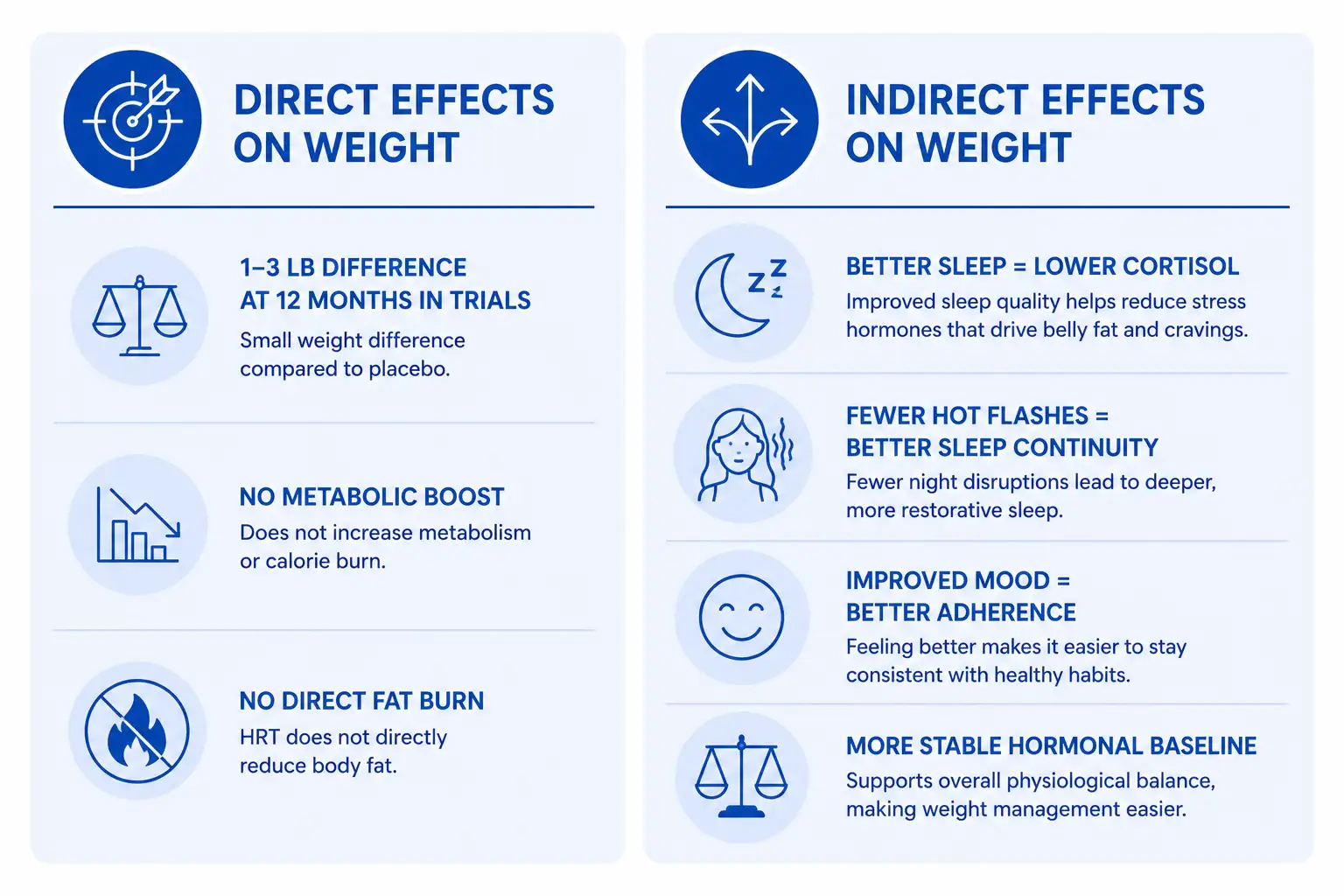
What HRT does not do
HRT does not boost metabolism in any meaningful way. It does not burn fat directly; it does not increase calorie burn at rest, and it does not bypass the need for adequate protein, strength training, sleep, and stress management.
Studies on HRT and direct weight outcomes consistently show small differences (1 to 3 pounds at 12 months) between women on HRT vs not, when everything else is held constant. The direct effect on weight is modest.
What HRT does do for weight (indirectly)
The indirect effects often matter more than the direct effects. HRT addresses the perimenopausal symptoms that make weight loss harder:
- Better sleep means lower cortisol, better hunger signalling, and more energy for exercise.
- Fewer hot flashes mean fewer disrupted nights and less fatigue cascade.
- Improved mood means better adherence to nutrition and training plans.
- Less vasomotor disruption means a more stable platform for any weight loss intervention.
In other words, HRT does not directly cause weight loss… but it removes some of the underlying friction that has been preventing your existing efforts from working. Many women on HRT report that the same diet and exercise that were producing nothing suddenly start working within 8 to 12 weeks of starting HRT.
What HRT may shift
HRT can modestly counteract the estrogen-driven shift in fat distribution that drives midsection weight in menopause. Women on HRT often retain a more pre-menopausal fat distribution pattern (more hip and thigh, less midsection) than women without HRT, even at the same weight. This is a body composition change, and it’s a good thing.
"I tell my clients that HRT does not do the work, but it can make the work possible. Many women have been trying everything for years with no result. We add HRT, change nothing else, and suddenly the existing plan starts producing results. That is not a coincidence." Suzanne Harden, GFIT Perimenopause and Menopause Fat Loss and Strength Coach
Who HRT Helps Most
HRT is most effective for women who:
- Have moderate to severe vasomotor symptoms (frequent hot flashes, night sweats).
- Are within 10 years of menopause and under 60 (the timing hypothesis for cardiovascular benefit).
- Have an intact reproductive history and no contraindications (history of breast cancer, certain clotting disorders, etc.).
- Are willing to follow up regularly with their prescribing physician.
HRT is generally not the first line for women who:
- Have mild or no vasomotor symptoms.
- Have specific contraindications.
- Are more than 10 years post-menopause without prior HRT use.
- Prefer non-hormonal interventions and have not yet tried them.
How to Have the Conversation with Your Physician
Most family physicians in Manitoba can prescribe HRT. Specialists (gynecologists, NAMS-certified menopause practitioners) can help with more complex cases. What to bring to the conversation:
- A symptom log: 30 days of hot flash frequency, sleep quality scores, mood patterns, and weight.
- Your full medical history, including any family history of breast or ovarian cancer, blood clots, or cardiovascular disease.
- Recent bloodwork: FSH, estradiol, thyroid panel, A1C, lipids.
- Your goals: what symptoms most affect your quality of life?
- Any non-hormonal interventions you have tried and how they have worked.
Your coach can help you assemble this picture before the appointment. We do this regularly for clients considering HRT, including those who ultimately decide against it.
How HRT Integrates with Coaching
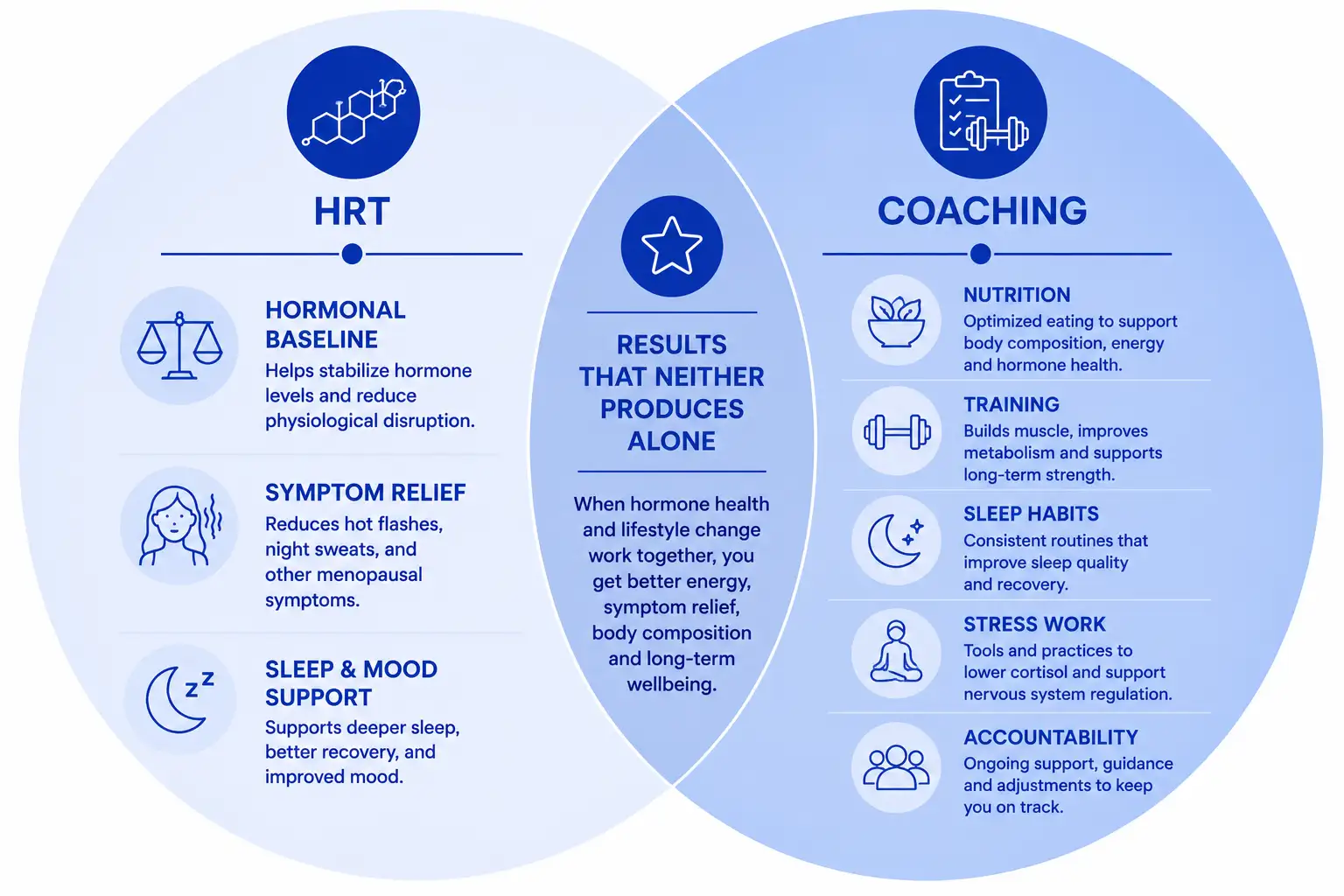
HRT and coaching are complementary, not competitive. Most of our perimenopausal and menopausal clients who pursue weight loss while on HRT do meaningfully better than they did with either intervention alone.
What coaching adds to HRT:
- The nutrition, training, sleep, and stress work that HRT does not do.
- Accountability through the 6 to 12 weeks while HRT effects build.
- Tracking and adjustment of the weight management plan as HRT settles in.
- Symptom log support for follow-up appointments with your physician.
What HRT adds to coaching:
- A more stable hormonal baseline makes the coaching work more effectively.
- Better sleep, mood, and energy for adherence.
- Reduced symptom load so your attention can go to the lifestyle work.
www.gfitwellness.ca/perimenopause-menopause-weight-loss-coaching-winnipeg
One of our Winnipeg clients, Janet, had been working with a personal trainer for two years and had lost no weight. She came to us at 52, desperate for help and to see some actual change. We made the standard changes (protein, structure, sleep, alcohol) and saw modest progress over the first 8 weeks. We then encouraged her to discuss HRT with her physician to address her severe sleep disruption. Two weeks after starting HRT, her sleep transformed. Six weeks after that, she had lost 11 more pounds doing the same plan.
Want a coach in the HRT conversation?
Book a free 15-minute consult with our Winnipeg menopause coaching team. We'll help you assemble the picture you bring to your physician and confirm your insurance coverage on the call.
Frequently Asked Questions
No. The myth that HRT causes weight gain isn't backed by research. Studies consistently show no weight gain attributable to HRT itself. Modest weight gain is common during the menopause transition regardless of HRT status, and many women have wrongly attributed that to HRT when it was a confound of timing.
Modestly. HRT can shift fat distribution toward a more pre-menopausal pattern (more hip and thigh, less midsection), even when total weight does not change much. The bigger effect is indirect: HRT improves sleep and reduces cortisol, both of which drive midsection fat accumulation in menopause.
The term "bioidentical" is marketed in two different ways. FDA and Health Canada-approved bioidentical hormones (estradiol patches, micronized progesterone) are the standard of care and effective. Custom-compounded bioidentical hormones from compounding pharmacies are less regulated and not clearly superior to regulated bioidenticals. Discuss with your physician.
The current evidence supports HRT for symptom control as long as the benefits outweigh the risks for the individual woman, with regular review. The old recommendation of "lowest dose, shortest duration" has been refined. Some women appropriately stay on HRT for 5, 10, or 15+ years. The decision is individualized.
Several effective non-hormonal options exist for managing perimenopausal symptoms: low-dose SSRIs for hot flashes and mood, gabapentin for vasomotor symptoms and sleep, CBT specifically for vasomotor symptoms, and the lifestyle interventions covered throughout our menopause cluster. Many women without HRT manage symptoms effectively with these tools plus coaching support.





Book a call with our Wellness Coordinator to learn more


