
Cortisol, Stress, and Perimenopause Weight: A Practical Plan

We see it in our clients over and over: stress in your 30s simply didn’t show up on your body the way it does now in your 40s. The same arguments, deadlines, school drop-offs, and late nights now seem to settle around your middle, and stay there. You didn’t get less resilient; your system just handles cortisol differently in perimenopause. This article explains why, what cortisol actually does (and doesn’t) do, the practical tactics that can give you relief in 10 minutes a day, and when to bring in a coach or therapist to support the bigger pattern.
Perimenopause raises baseline cortisol through three different pathways: declining estrogen and progesterone, fragmented sleep, and reduced stress recovery. Chronically elevated cortisol drives visceral fat storage, muscle breakdown, sleep disruption, and cravings. The interventions that work aren’t actually all that dramatic. We call them the GFIT 5 Cortisol Interventions: consistent sleep, daily walking, limiting alcohol, strategic protein and carbs, and 10 minutes of nervous-system work most days. Done for 12 weeks, the pattern shifts and we see results.
Carrying stress in your midsection and not sure what to do about it?
Book a free 15-minute consult with our Winnipeg menopause coaching team. We'll build a stage-appropriate stress and cortisol plan and confirm your insurance coverage on the call.

What Cortisol Actually Does
Despite popular belief, cortisol is not a villain. It’s a critical hormone that supports waking up in the morning, responding to stress, regulating blood sugar, and modulating immune function. Healthy cortisol follows a daily rhythm: it’s highest in the early morning to wake you up, gradually declines through the day, and then is lowest at night to allow you to sleep.
The problem is not the cortisol itself. It’s the chronic elevation that never returns to baseline, or a disrupted rhythm where cortisol is too low in the morning and too high at night. Both patterns are common in perimenopause, and both drive the weight, sleep, and mood changes many women experience.
Why Perimenopause Raises Cortisol
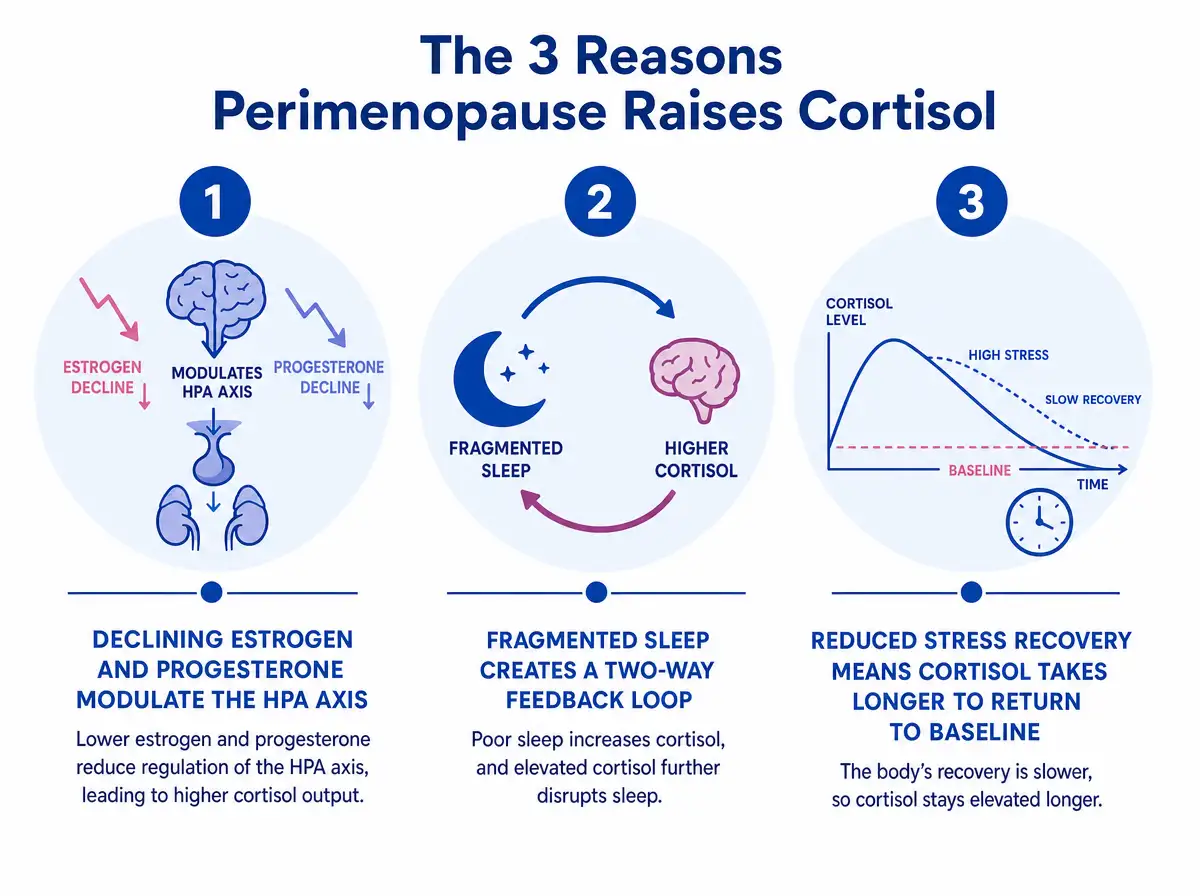
Declining estrogen and progesterone
Both hormones modulate the HPA axis (the brain's stress response system). As they decline in perimenopause, the brain becomes more reactive to stressors. The same email at work produces a larger cortisol response than it used to, and the recovery from that response is slower.
Fragmented sleep
Poor sleep raises baseline cortisol, and cortisol elevation makes sleep harder. This is a two-way feedback loop that compounds.
www.gfitwellness.ca/blog/sleep-and-perimenopause-weight-gain
Reduced stress recovery
In your 30s, a stressful day was followed by an evening of recovery, and the body was able to return to baseline relatively quickly. In perimenopause, this recovery is slower, partial, and often interrupted by the next stressor before your body is even able to return to baseline. The effect is that your cumulative stress load rises, even when individual stressors have not.
What Chronically Elevated Cortisol Does to Your Weight
- Drives visceral fat storage preferentially (the midsection pattern many women describe).
- Breaks down muscle, lowering metabolic rate.
- Increases blood sugar and insulin, driving fat storage.
- Disrupts sleep, which compounds all of the above.
- Increases cravings for high-carbohydrate, high-calorie foods (the afternoon energy crash followed by intense carb cravings).
- Reduces willingness to exercise.
"The afternoon energy crash followed by intense carb cravings is not a willpower issue. It’s a cortisol pattern. And once we treat it as a pattern instead of a personal failure, the fix becomes obvious." Lana Jankovic, GFIT Fat Loss Coach for Midlife Women
The GFIT 5 Cortisol Interventions
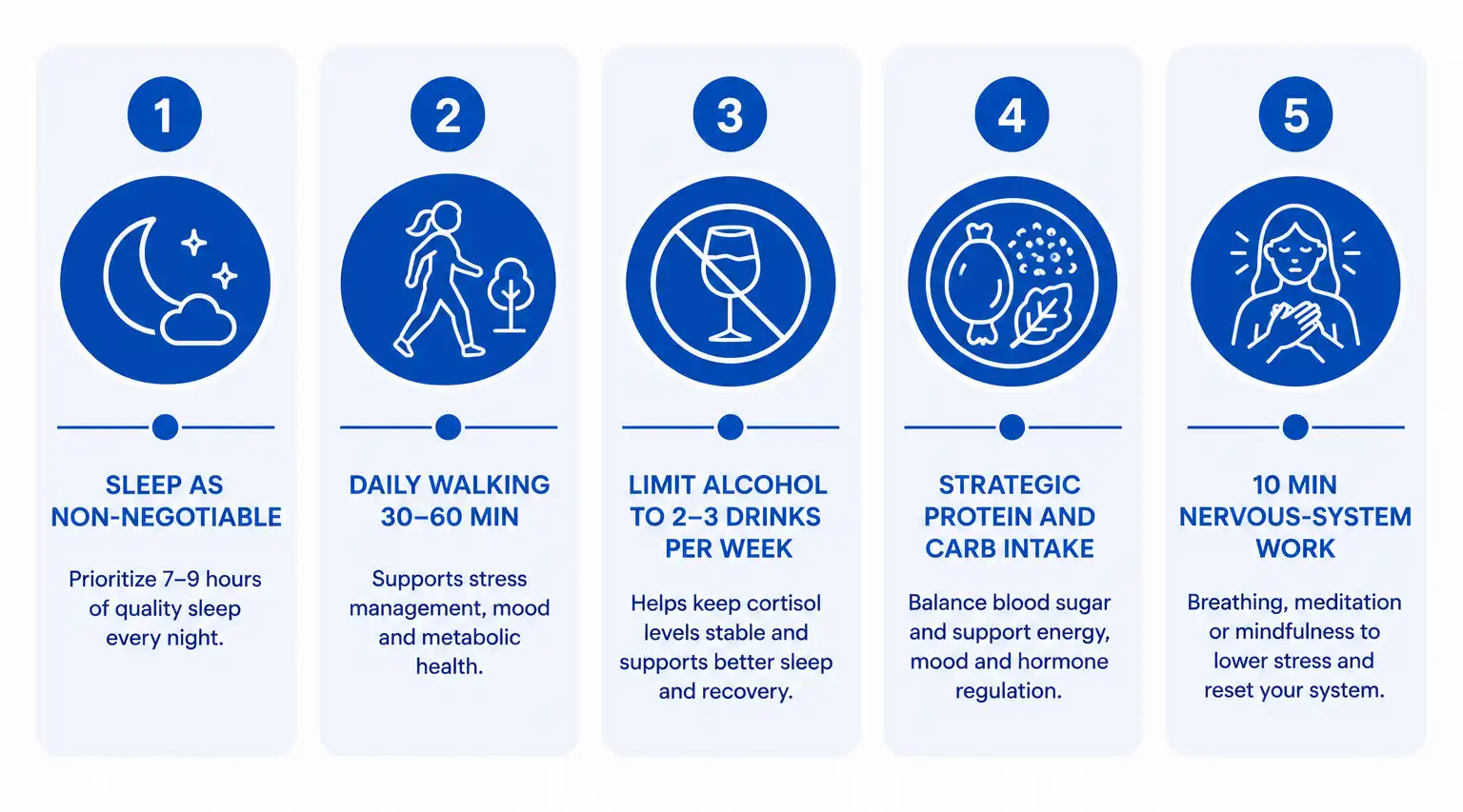
1. Sleep, treated as non-negotiable
Sleep optimization is the single highest-leverage cortisol intervention you can make. The 14-day sleep reset is the starting point.
2. Daily walking, 30 to 60 minutes total
Walking activates the parasympathetic nervous system (the rest-and-digest counterpart to stress). 30 to 60 minutes per day, split or continuous, in nature when possible. A walk after work specifically signals the body to shift from stress to recovery mode.
3. Limiting alcohol
Alcohol raises overnight cortisol, even at modest doses. The drink that helps you wind down also fragments your sleep and raises your cortisol load the next day. Reducing your intake to 2 to 3 drinks per week (or less) produces a measurable improvement in cortisol-related symptoms within 4 weeks.
4. Strategic protein and carb intake throughout the day
Cortisol management benefits from stable blood sugar. The interventions:
- Breakfast with 30+ grams of protein within 60 minutes of waking. This stabilizes the morning cortisol surge.
- Complex carbs at lunch and dinner (think sweet potato, quinoa, beans). This supports steady afternoon energy.
- Avoid skipping meals. Long gaps elevate cortisol unnecessarily.
- A small protein-carb snack 1 hour before bed can help, especially if you find yourself waking at 3 am consistently.
5. 10 minutes of nervous-system work
This could be meditation, breathing exercises or yoga; any deliberate activation of the parasympathetic nervous system counts. Examples:
- Box breathing: 4 seconds in, 4 hold, 4 out, 4 hold.
- Cold exposure: 60 seconds of cold water at the end of a shower.
- Yoga nidra or non-sleep deep rest.
- Slow walking in nature without a phone.
- Journaling: brain dump everything you are worried about, then close the notebook.
Done most days for 6 to 12 weeks, the cumulative effect on cortisol patterns of this work is meaningful.
www.gfitwellness.ca/perimenopause-menopause-weight-loss-coaching-winnipeg
When to Bring in a Therapist
Coaching helps with the behavioural and lifestyle layer. But some patterns require more than that. Here are three signs you should bring in a therapist (in addition to, or instead of a coach):
- Stress eating is severe, frequent, or distressing.
- Anxiety or low mood is interfering with daily function.
- Past trauma is being activated by perimenopause symptoms and needs processing.
One of our Winnipeg clients, Anna, came to us at 47 carrying 12 pounds of midsection weight that had appeared during a stressful 18-month period. To her surprise, we didn’t cut her calories. We added the sleep reset, a daily walk after work, reduced alcohol from 5 drinks per week to 1, and 5 minutes of box breathing most evenings. Three months later her weight had dropped 7 pounds, her sleep had improved meaningfully, and she described feeling more like herself than she had in the last two years.
Want to address the cortisol pattern that diet alone is not fixing?
Book a free 15-minute consult with our Winnipeg menopause coaching team. We'll review your pattern and confirm your insurance coverage on the call.
Frequently Asked Questions
Yes. Chronically elevated cortisol drives visceral fat storage, breaks down muscle, increases insulin resistance, and disrupts sleep, all of which compound to make weight gain easier in perimenopause. Cortisol is not the only driver, but it is one of the most overlooked.
Consistent sleep, daily walking, limiting alcohol, consuming adequate protein and carbs throughout the day, and 10 minutes of nervous-system work on most days. None of these are dramatic, but the cumulative effect over 6 to 12 weeks is.
For most women, cortisol testing is not necessary to act. The symptom pattern (midsection weight, 3 am wakeups, afternoon energy crash, sugar cravings) is highly suggestive. If you do want to test, a 24-hour urine cortisol or a 4-point salivary cortisol panel is more useful than a single morning blood draw. Discuss with your physician or naturopath.
Yes. Cortisol preferentially drives visceral fat storage (the deep midsection fat) over subcutaneous fat. The midsection weight gain pattern many perimenopausal women describe is largely cortisol-driven, especially when accompanied by sleep disruption and high stress.
Stress reduction alone usually produces modest weight loss (3 to 8 pounds over 6 months) when nothing else changes. The bigger effect is making the other interventions (nutrition, training) actually work. Many women who have been stuck on a plateau for years see meaningful weight loss start once the cortisol pattern resolves.





Book a call with our Wellness Coordinator to learn more


