
Why Losing Weight Too Fast Can Backfire (and how to do it right)

We've all seen those extreme fitness promises, like "Lose 20 lbs in 30 days!" and thought, that sounds too good to be true and research shows that it is. While rapid weight loss is possible, the chances that it’s coming purely from body fat are slim. Plus, keeping that weight off permanently is even more unlikely.
The truth is, losing weight too quickly can do more harm than good, affecting both your body composition and long-term success. Sustainable fat loss isn’t about quick fixes or extreme calorie cuts. Instead, a moderate, steady rate of weight loss has been scientifically proven to maximize fat loss, preserve muscle, and improve performance, all while helping you break free from the toxic cycle of yo-yo dieting.
Here’s why we advocate for a slower, healthier approach.
1. Muscle Preservation
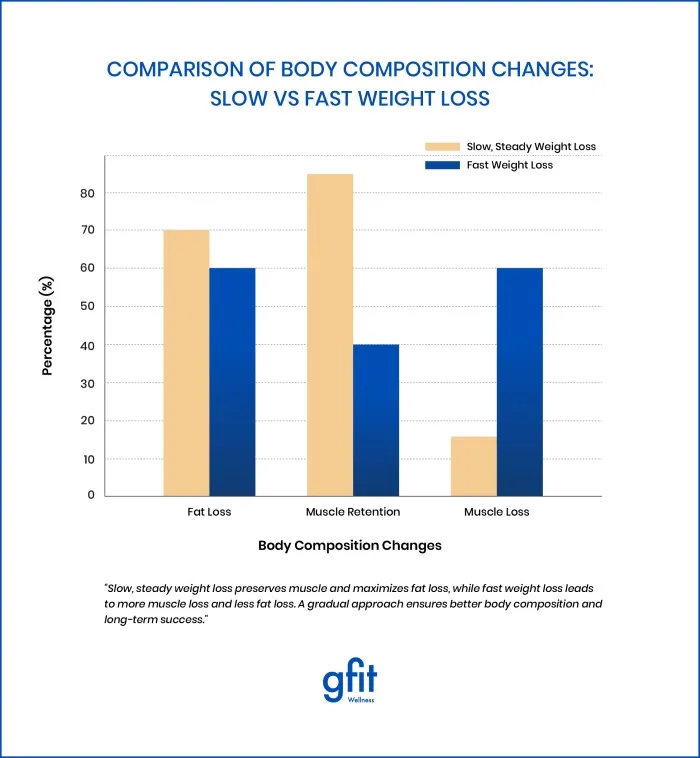
Losing weight too quickly can lead to significant muscle loss. Something you definitely want to avoid, as this negatively impacts both your body composition and your metabolism. Muscle mass is crucial for burning calories at rest, so losing it makes it harder to keep the weight off. By aiming for a moderate calorie deficit, your body has time to adjust, allowing you to shed fat while maintaining lean muscle.
2. Nutrient Deficiencies, Hormonal Imbalances, and Energy Crashes
Cutting calories too aggressively deprives your body of essential vitamins and minerals, leading to fatigue, weakened immune function, and long-term health issues. But it doesn’t stop there, rapid weight loss also disrupts key hormones like leptin, ghrelin, cortisol, and thyroid hormones. This imbalance can increase hunger, slow your metabolism, promote fat storage (especially around your midsection), and cause energy dips and mood swings.
Extreme dieting not only leaves you feeling sluggish but signals your body to enter "starvation mode," where your metabolism slows to conserve energy. This reduction in non-exercise activity thermogenesis (NEAT)—the calories you burn through daily activities—makes further weight loss harder and leads to frustrating plateaus or even weight gain. By sticking to a moderate calorie deficit, you can avoid energy crashes, keep your metabolism running efficiently, and burn more calories overall.
3. Stop the Yo-Yo Dieting for Good
Rapid weight loss often triggers quick rebounds. Drastic calorie cuts are unsustainable, and slow your metabolism, making it harder to keep the weight off. Repeated cycles of losing and regaining the same 20 lbs take a toll. Your metabolism declines, and your fat cells permanently multiply, making it harder and harder to lose weight each time you regain. A slow, steady approach lets your body adjust naturally, helping you keep off the weight you’ve worked so hard to lose.
What’s a Realistic Amount of Weight to Lose Each Week?
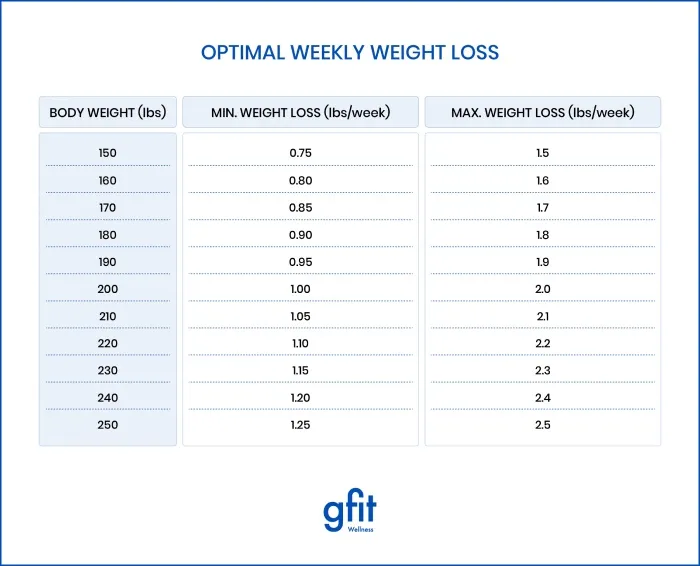
Research shows that a rate of around 0.5%-1% of your body weight per week is optimal. This range has been proven to maximize fat loss while minimizing muscle loss and maintaining metabolic health. Let’s break that down:
- For a 200 lb individual, that’s 1 to 2 lbs per week.
- For a 150 lb individual, that’s 0.75 to 1.5 lbs per week.
The truth is, there are no quick fixes when it comes to sustainable weight loss. It’s a slow, steady process fueled by consistency and lasting lifestyle changes. At GFIT, our expert coaches use evidence-based methods to provide you with the tools not only to lose weight but to keep it off for good. That’s why we’re industry leaders, responsible for thousands of life-changing transformations. Any coach can help you lose weight, but a GFIT coach? We’ll help you keep it off, permanently.





Book a call with our Wellness Coordinator to learn more


