
Nausea on Ozempic: 9 Practical Fixes That Actually Work
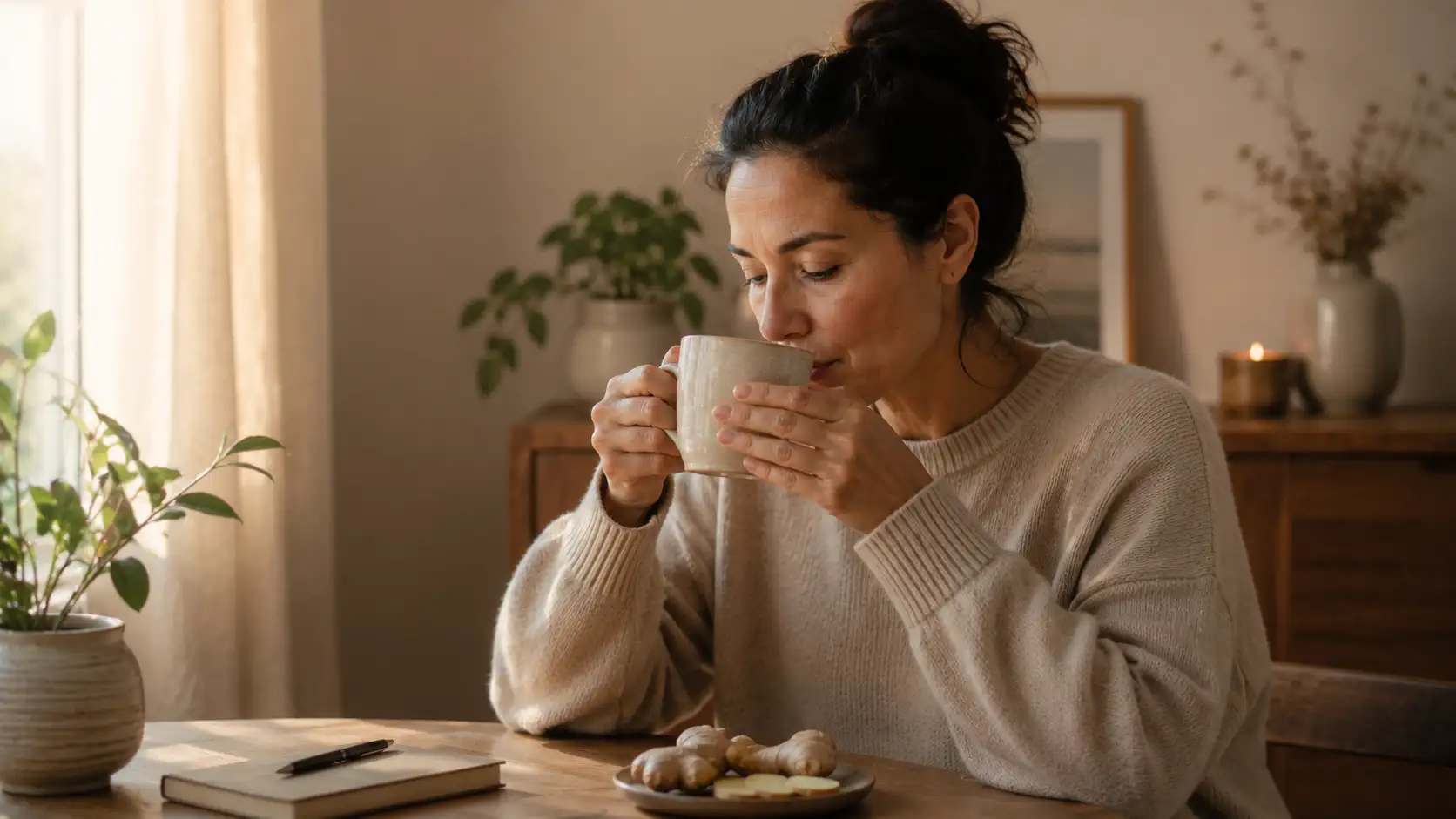
About 40 to 50% of patients experience meaningful nausea in the first 30 days of being on a GLP-1, and roughly 20 to 30% have it persist into month 2 or 3. The good news? Most cases are manageable with practical adjustments. This article walks through the 9 most effective fixes our GLP-1 clients use, ranked roughly by effect size.
Here is the short version: eat smaller meals more slowly, stop before you feel full, avoid trigger foods (high fat, very sweet, strong smells), hydrate consistently throughout the day, stay upright after eating, time food away from your dose day if possible, use ginger and other natural antiemetics, ask your prescriber about a slower dose escalation, and know when to seek medical attention.
Nausea making the first 30 days on Ozempic miserable?
Book a free 15-minute consult with our Winnipeg GLP-1 coaching team. We'll review your situation, build a plan, and confirm your insurance coverage on the call.

Why GLP-1s Cause Nausea
GLP-1 medications slow gastric emptying meaningfully: food then sits in the stomach longer than the brain expects, which the brain reads as fullness or nausea. The medication also acts on receptors in the brain's emetic center directly, which contributes to the nausea signal independent of stomach activity.
Nausea is most intense in the first 7 to 14 days after starting or dose-increasing, then tends to settle. Most patients see meaningful improvement by week 4 to 6. Persistent severe nausea past 8 weeks warrants a prescriber conversation.
The 9 Fixes
1. Smaller meals, eaten slowly
This is the single most effective intervention you can make. Think half-sized portions, eaten over 20 minutes minimum, with deliberate pauses. The slowed gastric emptying of the medication does not handle large fast meals well.
2. Stop before you feel full
Past the first hint of fullness, nausea rises sharply. The discipline to put down the fork when 70% satisfied prevents the worst of the post-meal nausea.
3. Avoid trigger foods
- High-fat foods (fried, very oily, heavy cream sauces). These slow gastric emptying further.
- Very sweet foods trigger nausea in many patients.
- Strong smells: cooked fish, garlic, onions, etc. can be challenging in the first weeks.
- Carbonated drinks add to stomach pressure.
- Alcohol is a substantial nausea trigger.
4. Hydrate consistently
Sip water continuously throughout the day (2 to 3 litres total). Dehydration amplifies nausea. Cold water is often better tolerated than room-temperature water.
5. Stay upright after meals
Lying down or reclining within 60 minutes of eating worsens nausea. Stand, walk, or sit upright for at least an hour after meals.
6. Time food strategically around your dose
If you inject on a specific day each week (e.g., Sunday), many patients find that day 1 to 2 after the dose is the worst for nausea. Stick to lighter eating and easy-to-tolerate foods on those days; try to save heavier meals or social meals for days 4 to 7.
7. Use ginger and other natural antiemetics
- Fresh ginger tea, ginger candies, or ginger capsules have strong evidence for nausea reduction.
- Peppermint tea provides a mild but real effect.
- Acupressure wristbands (Sea-Bands) have some evidence for nausea relief.
8. Ask your prescriber about slower dose escalation
Most GLP-1 dose escalation protocols go monthly. If nausea is severe at a step-up, a slower escalation (6 to 8 weeks at each dose rather than 4) often eliminates the worst of it. This is a prescriber conversation.
9. Anti-nausea medication when needed
Your prescriber can offer short courses of ondansetron (Zofran) or other antiemetics if non-medical interventions are not enough. This is appropriate for severe nausea and should not be used long-term.
"Nausea is the symptom that pushes the most clients to quit GLP-1s early. 9 times out of 10 it is fixable with the small changes above, and most clients have not tried them systematically before they get to me." Anna Paulich, GLP-1 Coach.
When to Seek Medical Attention
Most GLP-1 nausea is uncomfortable but not dangerous. Seek medical attention if:
- Vomiting persists for more than 24 hours.
- You cannot keep any fluids down.
- Severe abdominal pain (not just nausea) is present.
- Signs of dehydration: dizziness, dark urine, rapid heartbeat.
- Signs of pancreatitis: severe upper abdominal pain radiating to the back, with nausea.
Pancreatitis is rare but serious. The pattern is distinctive (severe upper abdominal pain radiating to the back, often with nausea and vomiting). If suspected, this is an emergency room visit, not a wait-and-see.
One of our Winnipeg clients, Diane, was 3 weeks into Ozempic and had cancelled a vacation because of nausea. We walked through the 9 fixes in one call. She ate smaller meals, cut out fried foods, started ginger tea, and asked her prescriber for a 6-week (rather than 4) dose-escalation timeline. Within 2 weeks, her nausea was a fraction of what it had been, and she kept her next trip on the calendar.
If low energy is also keeping you out of the gym, see how to train on Ozempic when your energy is low.
Want a personalized nausea management plan?
Book a free 15-minute consult with our Winnipeg GLP-1 team. We'll walk through your specific case and confirm your insurance coverage on the call.
Frequently Asked Questions
Most patients see meaningful improvement by week 4 to 6. About 20 to 30% have persistent nausea into month 2 to 3. Severe nausea past month 2 to 3 warrants a prescriber conversation about dose, timing, or alternative GLP-1s.
Bland, low-fat, easy-to-digest foods: rice, plain chicken, eggs, toast, crackers, broth-based soups, ginger tea, peppermint tea. Greek yogurt and cottage cheese are usually well-tolerated and provide protein. Smoothies (cold, mild flavor, modest sugar) often work when solid food does not. For the full protein playbook on how to preserve muscle during your GLP-1 protocol, see the GLP-1 protein playbook.
Ozempic does not require food for absorption. Whether you eat around your dose is independent of medication effectiveness. Most patients find the dose day itself is worst for nausea regardless of food timing; lighter eating on dose day often helps.
Generally yes for occasional use, but discuss with your pharmacist or prescriber to confirm no medication interactions. Long-term reliance on Gravol or other antiemetics is not the right approach; the underlying causes (meal size, food choices, dose timing) should be addressed first.
Call if vomiting persists more than 24 hours, you cannot keep fluids down, you show signs of dehydration, or you have severe abdominal pain (especially radiating to the back, which can signal pancreatitis).




Book a call with our Wellness Coordinator to learn more


