
The Best Foods to Combat Perimenopause Weight Gain
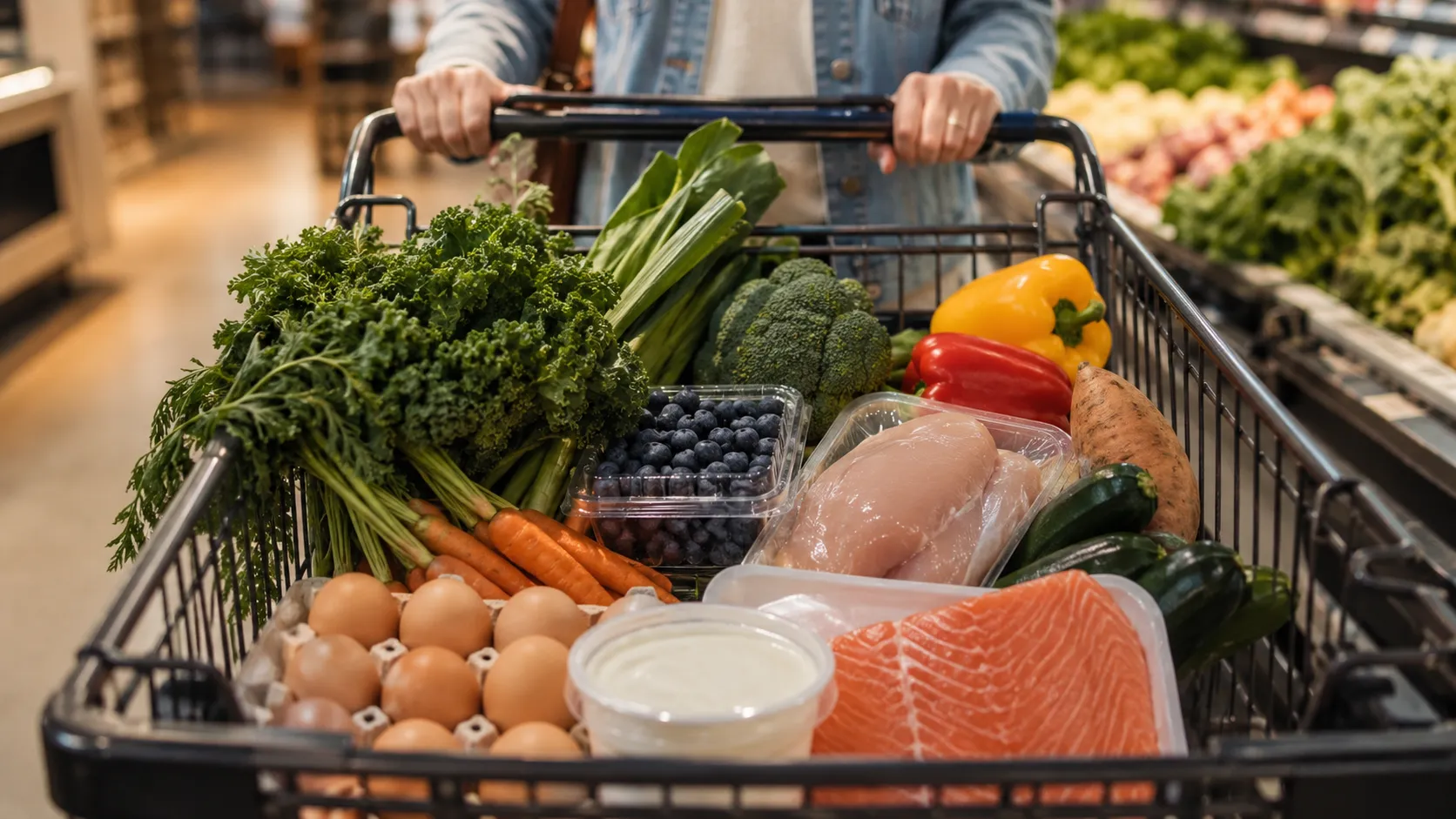
Search results for perimenopause foods will hand you a list of 47 superfoods and a 30-day elimination diet. But honestly? Neither is helpful. What actually helps in perimenopause is a small set of repeatable, affordable, available-in-any-Winnipeg-grocery-store foods organized into a weekly structure you can actually execute. This article gives you the exact blueprint we use at GFIT, the 25 foods that we recommend most to our Winnipeg perimenopausal clients, plus the weekly structure that gets you eating them without thinking about it.
In short, you want to build your meals around lean protein (chicken, fish, eggs, Greek yogurt, tofu, lean beef), fibre-dense plants (cruciferous vegetables, berries, beans, lentils, oats), healthy fats (olive oil, avocado, nuts, seeds, fatty fish), and complex carbohydrates that come with fibre (sweet potato, quinoa, steel-cut oats, beans). De-emphasize (don’t eliminate): refined grains, alcohol, ultra-processed snacks, sugary drinks.
Want a weekly meal plan built around your preferences and schedule?
Book a free 15-minute consult with our Winnipeg nutrition coaching team. We'll build a stage-appropriate plan and confirm your insurance coverage on the call.

GFIT’s 4 Perimenopause Nutrient Priorities

1. Protein, at every meal
As estrogen declines, muscle protein synthesis becomes less efficient; this means the same high-protein meal builds less muscle now than it did at 35. The fix? More protein, evenly distributed: 1.4 to 2.0 grams per kilogram of bodyweight per day, split across three meals at 30 to 40 grams each.
Best perimenopause protein sources:
- Chicken breast, skinless. 31 g per 100 g cooked.
- Greek yogurt (0% or 2%). 10 g per 100 g.
- Cottage cheese (1%). 12 g per 100 g.
- Eggs and egg whites. 6 g per egg, 11 g per 100 g of egg white.
- Lean ground turkey or chicken. 22 g per 100 g.
- White fish (cod, tilapia, haddock). 20 to 25 g per 100 g.
- Canned tuna or salmon in water, 30g per can.
- Tofu (extra firm). 15 g per 100 g.
- Whey protein isolate. 24 g per scoop.
For the full breakdown on protein for fat loss and how to hit your daily target, see blog "How Much Protein Do You Actually Need to Lose Fat?"
2. Fibre, 25 to 35 grams per day
Fibre supports gut health, blood sugar regulation, satiety, and reduction of visceral fat through short-chain fatty acid production. Most Canadian women eat 12 to 18 grams of fibre per day. This gap matters!
Best perimenopause fibre sources:
- Berries (blueberries, raspberries, blackberries). 4 to 8 g per cup.
- Beans and lentils (black beans, chickpeas, green lentils). 8 to 15 g per cup cooked.
- Steel-cut oats. 5 g per 1/2 cup dry.
- Avocado. 10 g per medium avocado.
- Cruciferous vegetables (broccoli, cauliflower, Brussels sprouts). 3 to 5 g per cup cooked.
- Sweet potato. 4 g per medium.
- Chia seeds and ground flax. 5 g per tablespoon.
3. Healthy fats
Despite popular belief, fat is not your enemy in perimenopause. Adequate dietary fat supports hormone production, satiety, and absorption of fat-soluble vitamins. Consider:
- Olive oil (extra virgin) for cooking and dressings.
- Avocado.
- Fatty fish (salmon, mackerel, sardines) for omega-3s.
- Walnuts and almonds (look for whole, not coated)
- Ground flax and chia.
4. Calcium, vitamin D, magnesium
These three micronutrients consistently come up short in perimenopausal women, and they play a crucial role in bone density, mood, sleep, and muscle function. Most women in Winnipeg are vitamin D-deficient in winter and benefit from supplementation. Calcium and magnesium are usually adequate from food if dairy and leafy greens are present in the diet.
- Calcium: dairy, Greek yogurt, cottage cheese, leafy greens, fortified plant milks.
- Vitamin D: fatty fish, fortified dairy, sunlight (limited in Winnipeg from October to March), supplementation.
- Magnesium: pumpkin seeds, almonds, spinach, beans, dark chocolate.
"The single biggest dietary change for most perimenopausal clients is not adding a superfood. It’s doubling their protein and tripling their fibre. Once those two are in place, everything else gets easier." Cheryl Hirst, Perimenopause and Menopause Transformations Coach
A Sample Weekly Structure
Breakfast (rotate 3 to 5 options)
- Greek yogurt with berries, ground flax, and a tablespoon of nut butter.
- 3 eggs scrambled with spinach, a side of berries, and a slice of whole grain toast.
- Cottage cheese with sliced fruit and pumpkin seeds.
- Steel-cut oats with protein powder stirred in, topped with berries and walnuts.
- Protein smoothie: whey isolate, frozen berries, spinach, ground flax, ultra-filtered milk.
Lunch (rotate 4 to 6 options)
- Grilled chicken on a large salad with mixed greens, beans, avocado, and olive oil dressing.
- Tuna with chickpeas, vegetables, olive oil and lemon.
- Leftover dinner protein with quinoa and roasted vegetables.
- Steak with rice and green beans.
Dinner (rotate 4 to 6 options)
- Baked salmon with sweet potato and broccoli.
- Stir-fry: lean beef or chicken or tofu, mixed vegetables, rice.
- Chicken thighs (skinless) with quinoa and roasted Brussels sprouts.
- Turkey and bean chilli with a side of Greek yogurt.
Snacks (when needed)
- Greek yogurt with berries.
- Cottage cheese with cucumber.
- A protein bar (Quest, Built, RX, Pure Protein).
- Protein shake.
www.gfitwellness.ca/online-nutrition-coaching-winnipeg
Your Grocery List

Perimenopause grocery list organized by category: proteins (chicken, ground turkey, salmon, tuna, eggs), Greek yogurt and cottage cheese, greens and cruciferous vegetables, quinoa and steel-cut oats and beans, berries and avocados, walnuts and almonds and seeds, olive oil, and whey protein isolate.
What we ask most of our clients to keep on hand at any given time. Most of these are available at any Sobeys, Save-On, Loblaws, Costco, or Superstore.
- Chicken breasts (fresh or frozen).
- Ground turkey or chicken (93/7 or leaner).
- Salmon or cod fillets (fresh or frozen).
- Canned tuna and salmon (in water).
- Eggs.
- Greek yogurt (Liberte 0%, Oikos Triple Zero, PC plain).
- Cottage cheese (Sealtest, Western Family, President’s Choice).
- Mixed greens, spinach, kale.
- Broccoli, cauliflower, Brussels sprouts.
- Sweet potatoes.
- Quinoa, steel-cut oats, brown rice.
- Beans and lentils (dried or canned, low-sodium).
- Frozen berries, fresh berries when in season.
- Avocados.
- Walnuts, almonds, pumpkin seeds.
- Ground flax or chia.
- Olive oil, extra virgin.
- Whey isolate or clean plant protein powder.
What to De-Emphasize (Not Eliminate)
- Alcohol: more than 3 to 4 drinks per week consistently slows perimenopausal progress.
- Ultra-processed snacks: chips, crackers, packaged sweets.
- Sugary drinks: pop, juice, sweetened coffee drinks; these give liquid calories without satiety.
- Refined grains: white bread, white pasta, pastries. Replace them most of the time with whole grain versions.
- Added sugar in obvious places: cereals, granola bars, flavoured yogurts, condiments.
The word ‘eliminate’ in nutrition advice can backfire with women in this stage; over-restriction tends to produce restrict-then-binge cycles. De-emphasize means "have less often, in smaller portions, without guilt when you do." Think 80/20.
One of our Winnipeg clients, Donna, came to us at 49, frustrated with intermittent fasting that produced results at first, but had stalled. She expected more intense fasting and restriction, but we didn’t do that. Instead, we rebuilt her grocery list using the structure above. Within six weeks her sleep had improved, her energy was back, and her waist had dropped 1.5 inches. The new structure made hitting protein and fibre automatic, kept her full, and produced great results.
Want a monthly meal plan built to drive real results in perimenopause?
Book a free 15-minute consult with our Winnipeg nutrition team. We'll build a stage-appropriate meal structure that fits your preferences and confirm your insurance coverage on the call.
Frequently Asked Questions
A protein-anchored, fibre-rich, mostly whole-food eating pattern, with strength training to drive lean muscle mass. The diet that works best is the one you will actually follow for 12 months, not 12 weeks. Extreme restriction backfires faster in perimenopause than in any other life stage.
Not entirely. Carbohydrate restriction can help some women with insulin resistance, but going very low carb often worsens cortisol, sleep, and training capacity in perimenopausal women. A moderate approach (40 to 50 grams of fibre-rich carbs per meal, mostly from whole sources) works better for most than aggressive restriction.
Phytoestrogen-containing foods (soy, flax, sesame, lentils) bind weakly to estrogen receptors and may modestly reduce some symptoms in some women. They do not replace the body's estrogen production, and they are not a substitute for HRT if symptoms warrant it. Including them in a varied diet is fine for most women; specific dosing for symptom relief is a conversation with your physician.
Most perimenopausal women in Winnipeg benefit from vitamin D supplementation (especially from October to March), and many benefit from magnesium for sleep. Calcium is usually adequate from food. Iron and B12 should be checked on bloodwork before supplementing.
Yes, in moderation. 1 to 3 cups per day is generally fine and may support energy and mood. Caffeine timing actually matters more than the total: cutting off caffeine after noon improves sleep in most perimenopausal women. You’ll also want to pay attention to additions (cream, syrups) that add calories without satiety.



Book a call with our Wellness Coordinator to learn more


