
WTF is Happening to My Body? The Truth About Peri-Menopause

Let me guess, the things that used to work for you—your workouts, your nutrition, your lifestyle—suddenly aren’t cutting it anymore. You’re exhausted, burnt out, frustrated, and don’t recognize yourself in the mirror. And the worst part? No one talks about this.
For years, we’ve been told that weight gain, muscle loss, and energy crashes during midlife are just part of aging, something we simply have to accept. But what if I told you that perimenopause doesn’t have to mean losing strength, gaining belly fat, and feeling like your body is out of your control?
If you’re feeling this way, you are NOT alone.
I’m a professional health and fitness coach, but about 18 months ago, I had no idea what was going on with MY body. What had always worked for me, my workouts, my nutrition, my lifestyle, suddenly stopped.
I was exhausted, frustrated, and felt unrecognizable. I couldn’t sleep, my energy crashed mid-afternoon, and I didn’t recognize myself physically or mentally. Looking back, I had lost my edge. I tried to stay positive, but no matter how hard I worked out, how heavy I lifted, or how dialed into my macros I was, I could NOT lose a single pound. In fact, I was gaining weight.
Then I realized that everything I was experiencing was likely due to declining hormones.
So I spent the next year learning everything I could about perimenopause, menopause, hormones, metabolism, and longevity and I got to work. I also got myself a coach, (yes, coaches need coaches too! Shoutout to Grant Reid!), because I knew I needed an outside perspective to help me course-correct. Slowly but surely, everything started to change.
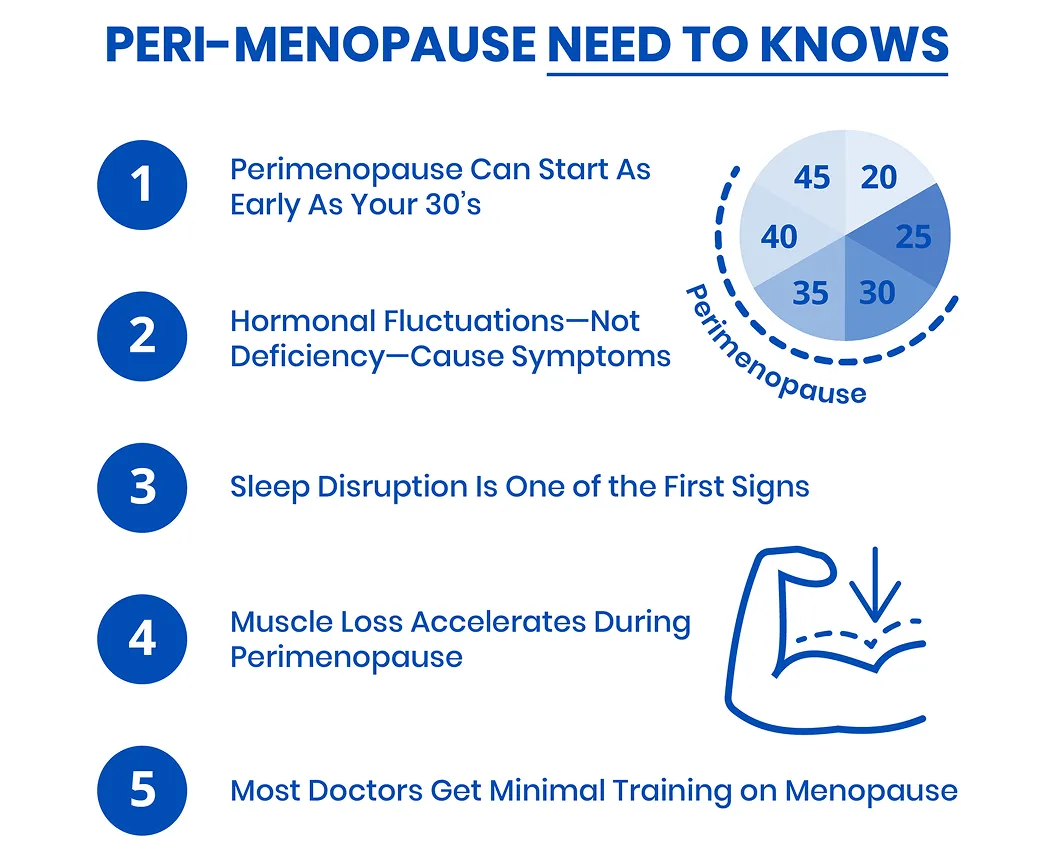
The reality is that most healthcare providers aren’t adequately trained to support women through this transition. The average medical school education includes less than five hours dedicated to perimenopause and menopause, and less than 3% of healthcare providers specialize in women’s hormone health. Even more concerning, 80% of OB-GYN residency programs provide no perimenopausal or menopausal training at all.
It’s no wonder so many women feel dismissed, unheard, or simply told to "just deal with it."
But here’s the truth. You don’t have to settle for discomfort, weight gain, or declining strength. With the right nutrition, training, and evidence-based strategies, you can take control of your health and thrive through midlife and beyond.
What is Perimenopause?
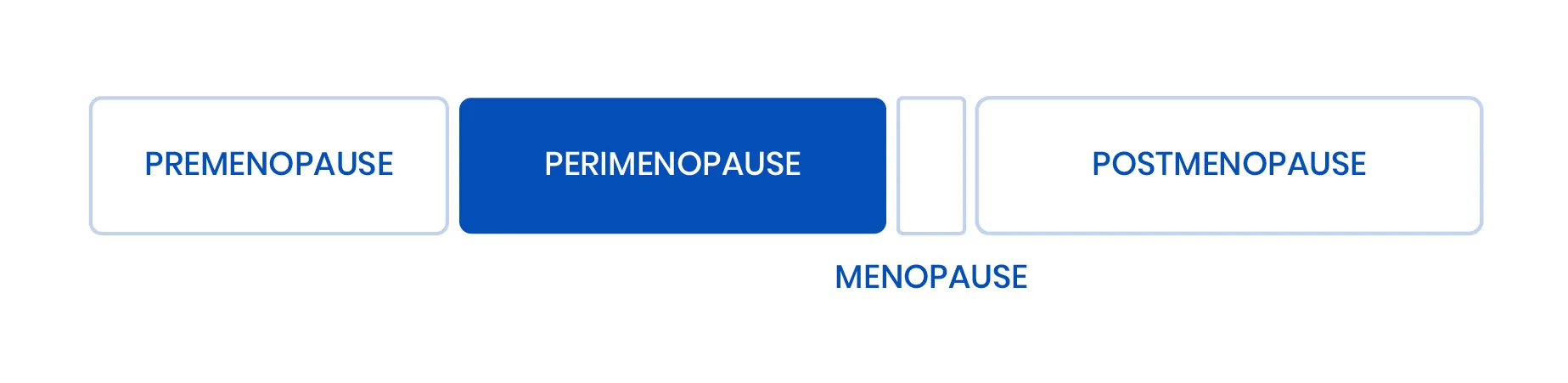

Perimenopause is the transition period leading up to menopause, typically beginning in the mid-to-late 40s but sometimes as early as the late 30s. It lasts for an average of 3-4 years but can extend up to a decade before full menopause occurs (defined as 12 consecutive months without a period).
During this time, hormonal fluctuations, especially in estrogen and progesterone, can cause significant body composition changes. Many women notice an increase in belly fat, muscle loss, and difficulty maintaining weight despite their usual habits staying the same.
How to Take Control of Your Body During Perimenopause
Here are five key things every woman in perimenopause needs to know:
1. Lifting Heavy Weights is Non-Negotiable
- Strength training at least 4x per week is essential for maintaining muscle, metabolism, and bone density.
- Focus on compound movements (squats, deadlifts, presses, rows).
- Strength training improves insulin sensitivity, making fat loss more manageable.
2. Prioritize Protein & Smart Nutrition
- Aim for at least 1g of protein per pound of body weight depending on your goals to prevent muscle loss.
- Carbs are not the enemy, they fuel workouts and hormone balance when eaten strategically.
- Avoid extreme dieting or skipping meals, as it can worsen hormonal imbalances.
3. Sleep is Crucial
- Aim for 7-9 hours per night to regulate hormones, improve recovery, and stabilize mood.
- Sleep disturbances during perimenopause are common—prioritizing sleep hygiene can make a difference.
4. Manage Stress Effectively
- Chronic stress worsens perimenopausal symptoms.
- Incorporate breathwork, meditation, and relaxation techniques to support your nervous system.
5. The Right Type of Cardio Matters
- Low-intensity steady-state (LISS) cardio (walking, cycling, swimming) is best for perimenopause.
- Moderate-intensity (MISS) can be useful in small amounts.
- Too much high-intensity training (HIIT) can increase cortisol and hinder fat loss.
The Bottom Line
The years leading up to menopause can feel like an uphill battle, but they don’t have to be.
Your body isn’t working against you. You just need the right tools and strategies to support it through this transition.
By focusing on strength training, strategic nutrition, and proper recovery, you can maintain a strong, lean body and feel your best in midlife and beyond.
Are you ready to take control of your health during perimenopause?
Let’s get started.




Book a call with our Wellness Coordinator to learn more


