
Hot Flashes and Weight: Is There a Connection?

Hot flashes are one of the most universally recognized symptoms of perimenopause and menopause, but what’s less recognized is that they are actually directly correlated with your weight. And it works in two ways: higher body fat tends to make hot flashes more frequent and severe, while hot flashes that disrupt sleep also tend to make it easier for your weight to creep up. This article walks you through that connection, what reduces hot flashes, and the interventions that improve both at the same time.
The short version? Body fat acts as an insulating layer that intensifies hot flashes, while the hormonal cascade behind hot flashes (the rapid rise and fall of LH and FSH) disrupts the sleep and stress regulation that makes weight management possible. The interventions that reduce both = weight loss (5 to 10% of bodyweight has a measurable effect on hot flashes), strength training, sleep optimization, alcohol reduction, and HRT (for women whose symptoms warrant it).
Hot flashes disrupting your sleep and your weight loss?
Book a free 15-minute consult with our Winnipeg menopause coaching team. We'll build a plan that addresses both at once and confirm your insurance coverage on the call.

What Hot Flashes Actually Are
A hot flash is a sudden, intense feeling of heat, usually in the upper body and face, and often accompanied by sweating and flushing (and sometimes chills afterward as the body cools). They typically last 1 to 5 minutes. Some women have a few per week; others have many per day. Most women experience them for 4 to 7 years; about a third have them for longer than a decade.
The mechanism is not fully understood, but it involves a narrowing of the thermoneutral zone (the body's tolerance for temperature variation) caused by declining and fluctuating estrogen. Small environmental temperature changes that the body once handled without notice now trigger a heat-shedding response.
The Bidirectional Link with Weight
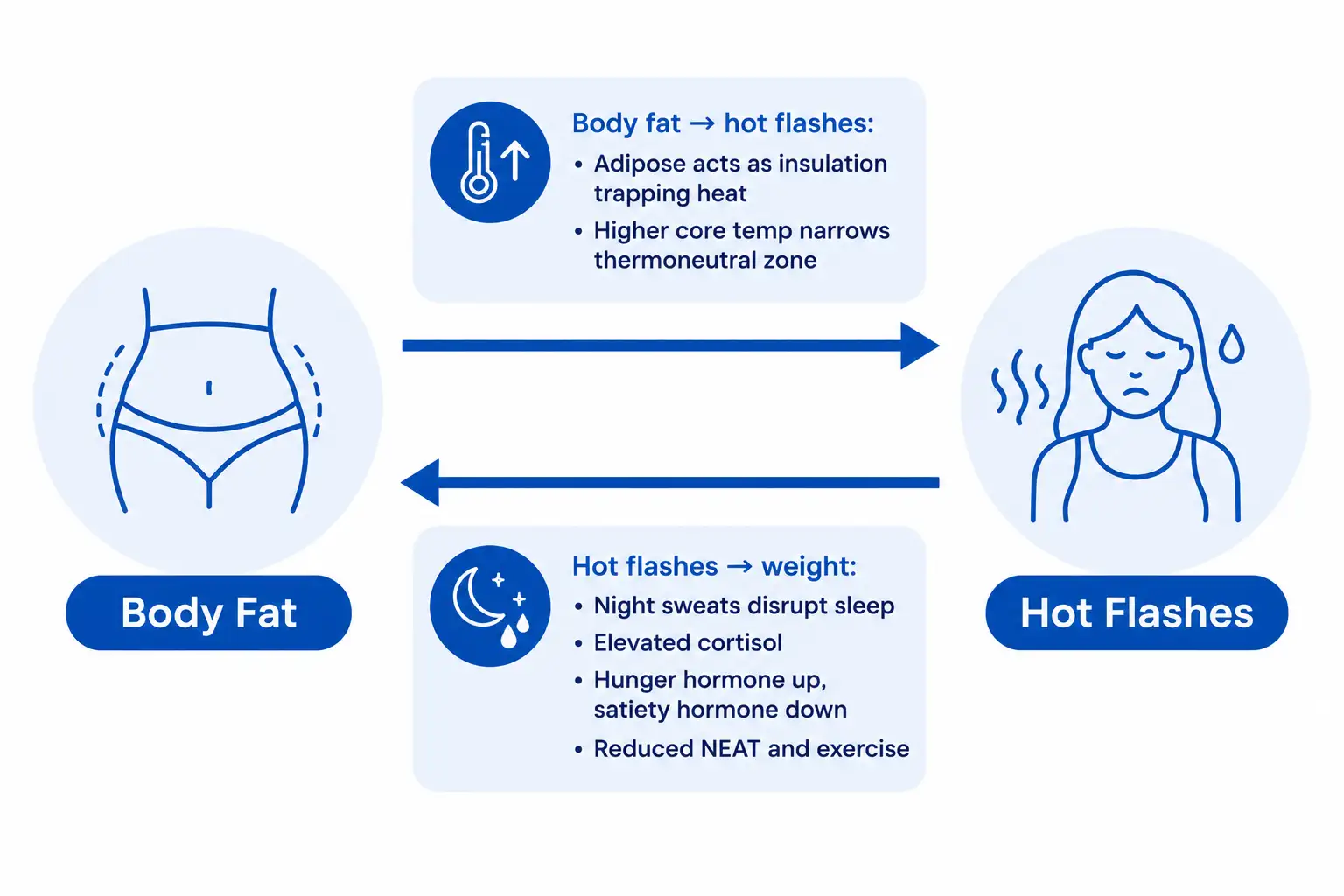
How weight affects hot flashes
Higher body fat intensifies hot flashes through two mechanisms: first, adipose tissue acts as an insulating layer that traps heat, making the body's heat-shedding response more dramatic when triggered. Second, body fat is metabolically active and contributes to a higher core temperature baseline, narrowing the thermoneutral zone further.
Studies on weight loss and hot flash frequency consistently show modest improvement at 5 to 10% bodyweight reduction. In other words, women carrying excess weight who lose 10 to 20 pounds often report a noticeable reduction in both hot flash frequency and severity, independent of any other intervention.
How hot flashes affect weight
Hot flashes that disrupt sleep (especially night sweats) drive the cascade of hormonal and behavioural changes covered in our article on sleep and perimenopause. Fragmented sleep raises hunger hormones, lowers satiety, increases cortisol, and reduces willingness to exercise. Many women describe a pattern where their weight crept up as their hot flashes intensified, even when nothing else about their lives consciously changed.
This is why addressing hot flashes isn’t just a quality-of-life intervention. It’s a fundamental weight management intervention, too.
"Many of my clients have been told their weight will improve if they just push through the menopause symptoms. But honestly? I don’t find that to be the case in my work. Addressing the symptoms makes the fat loss work possible." Julie Pacin, GFIT Coach (Certified Menopause Specialist)
What Actually Reduces Hot Flashes
Several interventions have evidence behind them, with varying levels of effect.
Most effective
- HRT (hormone replacement therapy). The most effective single intervention for moderate to severe vasomotor symptoms. Provides 70 to 90% reduction in hot flash frequency for most women. A coach can help support you through your HRT journey, but the decision is ultimately between you and your physician.
- Weight loss of 5 to 10% in women carrying excess weight. This shows a measurable reduction in both frequency and severity.
- Cooling the bedroom and dressing in layers.
Moderately effective
- Avoiding identified triggers: alcohol, spicy food, caffeine, hot drinks, hot showers. This is highly individual and requires tracking to figure out your own patterns and triggers.
- Stress management: many women report flares during high-stress periods.
- SSRIs at low doses (paroxetine 7.5 mg, escitalopram 10 mg) show evidence for non-hormonal management of vasomotor symptoms. This is another decision to be made in conjunction with your doctor.
- CBT (cognitive behavioural therapy) for hot flashes; these show modest but real evidence for reducing distress and frequency.
Mixed or weak evidence
- Soy isoflavones and black cohosh. Some women report benefit, but evidence is mixed.
- Acupuncture. This can be helpful for some women, not for others.
- Vitamin E and other supplements. These have limited evidence for a direct effect on hot flashes.
Interventions That Reduce Both Hot Flashes and Weight
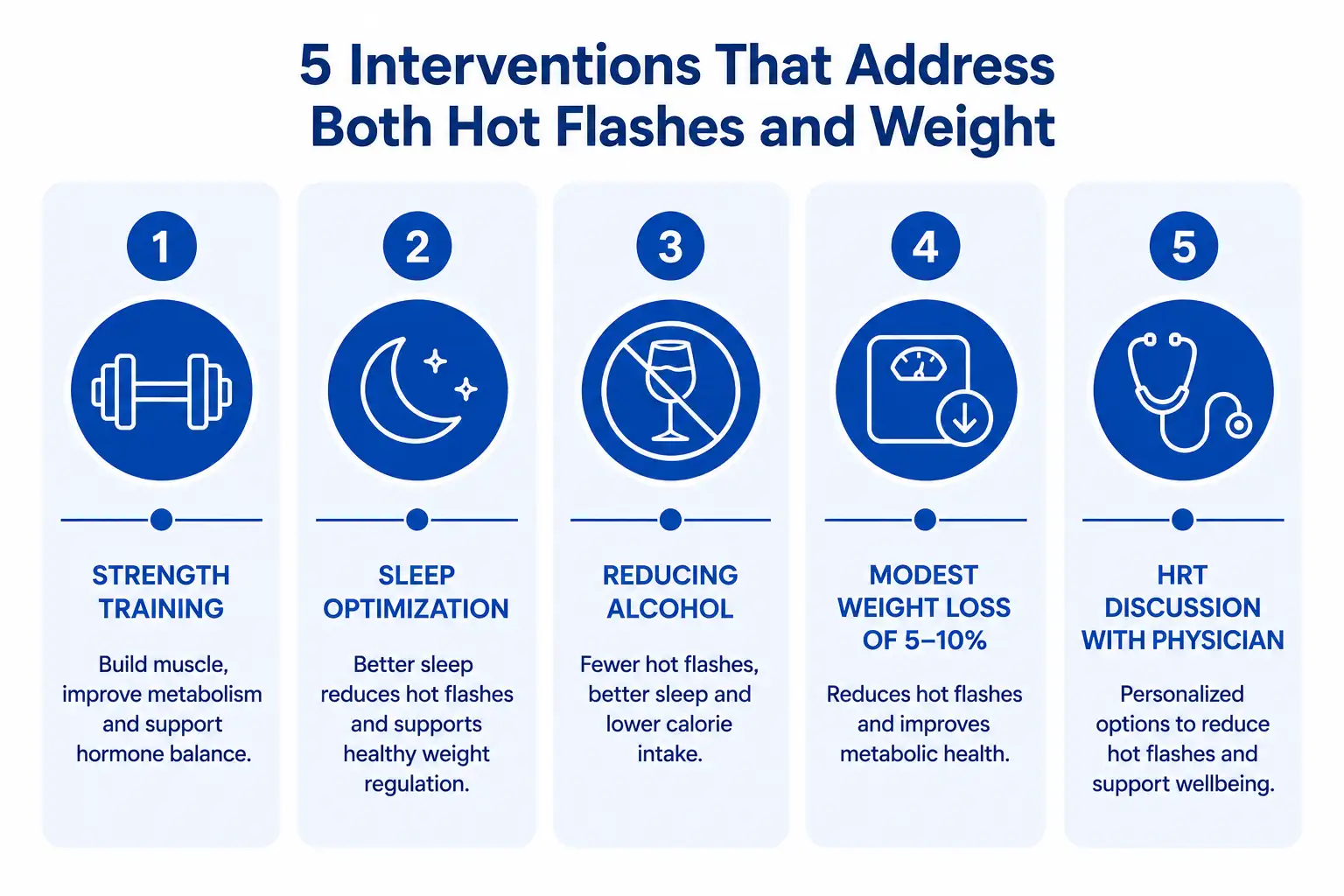
1. Strength training
Strength training improves body composition, supports metabolic health, and consistently reduces hot flash severity in studies on perimenopausal women. The mechanism is not fully clear, but it likely involves cortisol regulation and improved insulin sensitivity.
2. Sleep optimization
Better sleep reduces both the cortisol pattern that amplifies hot flashes and the hormonal cascade that drives weight gain.
www.gfitwellness.ca/blog/sleep-and-perimenopause-weight-gain
3. Reducing alcohol
Alcohol is both one of the most common hot flash triggers and one of the most common silent contributors to perimenopausal weight gain. Reducing alcohol typically produces a noticeable improvement in both within 2 to 4 weeks.
4. Weight loss (within reason)
Modest, sustainable weight loss (5 to 10% of body weight) reduces hot flash burden and improves nearly every other perimenopause symptom marker. But note that aggressive weight loss often backfires (raises cortisol, worsens sleep, and can actually intensify hot flashes during the deficit).
5. HRT discussion with your physician
If hot flashes and weight gain are both significant and other interventions have not produced enough improvement, HRT can help by addressing the hormonal driver of both. It’s not a direct weight loss intervention, but it stabilizes sleep, mood, and vasomotor symptoms in ways that make weight loss meaningfully easier for many women.
One of our Winnipeg clients, Mary, came to us at 53 with significant hot flashes and an extra 14 pounds of weight gained over the previous two years. We focused on sleep, strength training, and reducing alcohol from 6 drinks per week to 2. Within 8 weeks, her hot flash frequency had roughly halved, and her weight had dropped 5 pounds. She subsequently chose to start HRT with her physician, which reduced her remaining hot flashes even further.
Want a plan that addresses hot flashes and weight together?
Book a free 15-minute consult with our Winnipeg menopause team. We'll review your symptoms and weight pattern and confirm your insurance coverage on the call.
Frequently Asked Questions
Losing 5 to 10% of body weight measurably reduces hot flash frequency and severity in women who are carrying excess weight. Complete elimination is uncommon from weight loss alone, but the reduction is often meaningful. Weight loss combined with HRT, sleep optimization, and alcohol reduction produces the largest combined effect.
Yes, primarily through sleep disruption. Hot flashes that wake you at night drive the cascade of elevated hunger hormones, lower satiety, higher cortisol, and reduced NEAT that make weight loss harder. Addressing the hot flashes (through any combination of HRT, weight loss, and sleep optimization) makes fat loss easier.For the full biological picture, see our article on why weight loss gets harder during menopause.
The most effective non-hormonal medical option is low-dose SSRIs (paroxetine 7.5 mg, escitalopram 10 mg), which require a prescriber. Among lifestyle interventions, weight loss, strength training, sleep optimization, and alcohol reduction collectively have strong evidence. CBT specifically for hot flashes has modest but real evidence.
Some women report meaningful benefit; others report no effect. Both are generally safe to try for 6 to 12 weeks. If no clear benefit emerges in that window, they are unlikely to help long-term. Note that black cohosh interacts with certain medications and should be discussed with your physician.
When hot flashes are interfering with sleep, work, mood, or relationships, talk to your physician. HRT and prescription non-hormonal options can be transformative when symptoms are moderate to severe. There is no need to suffer through severe vasomotor symptoms when effective treatments exist.





Book a call with our Wellness Coordinator to learn more


