
Why am I gaining weight during perimenopause when nothing has changed?
You've eaten less. Added cardio. Counted calories. Yet the scale climbs and the weight settles around your middle. You're not imagining it, and you haven't lost your discipline. Your physiology has changed, and the old rules changed with it. GFIT gives you evidence-based coaching built for midlife: weekly 1:1 coaching backed by 50+ registered health professionals.
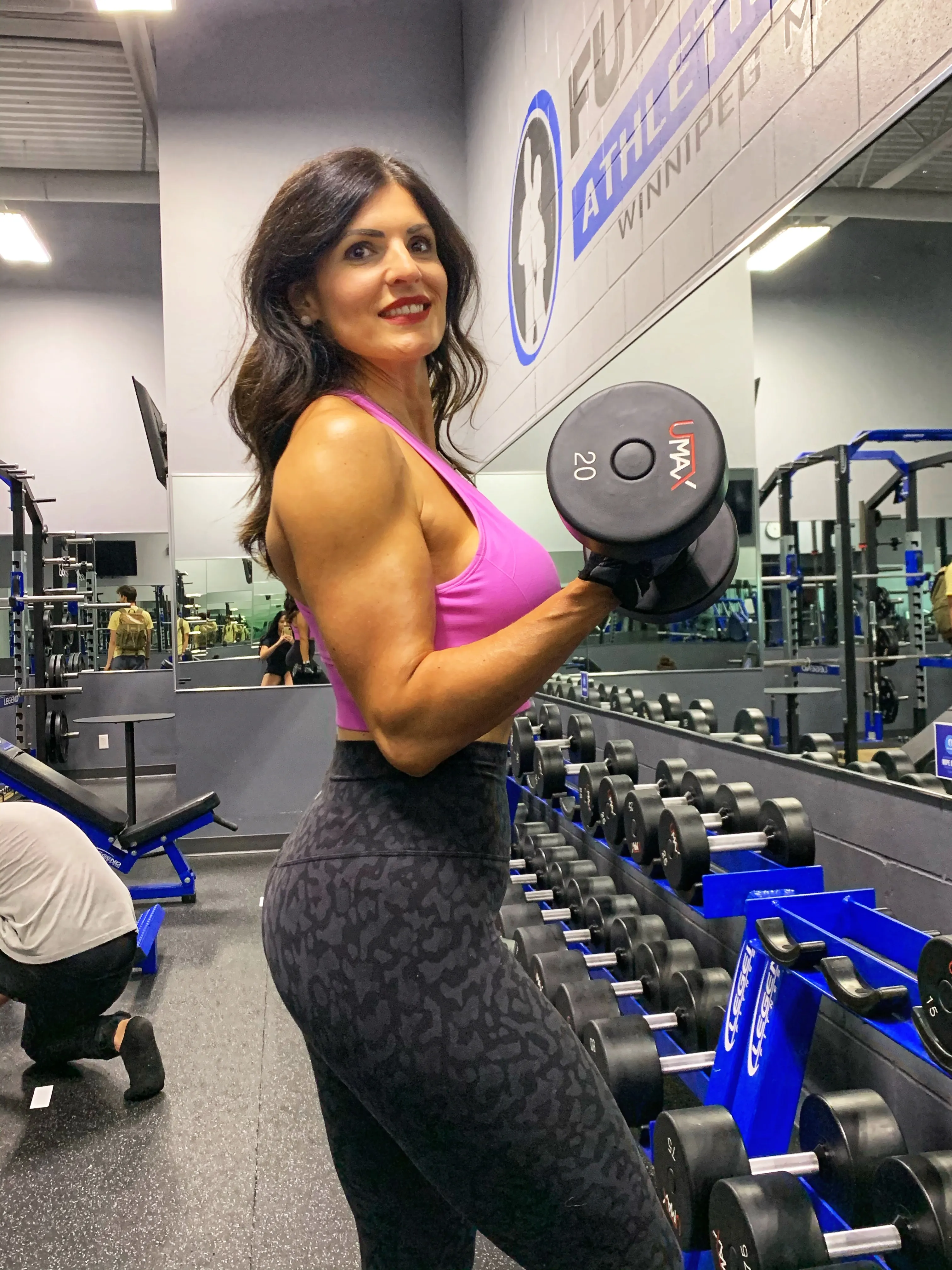
Why am I gaining weight during perimenopause?
Perimenopause weight gain is caused by a combination of fluctuating estrogen, age-related muscle loss, reduced recovery, disrupted sleep, higher stress, and shifting fat distribution toward the abdomen, not by hormones alone and it is not inevitable. Women who prioritize progressive strength training, adequate protein, quality sleep, stress management, and a sustainable (not extreme) calorie intake can improve body composition during perimenopause. The key is using strategies built for your current physiology, not the ones that worked in your twenties.
You're not lazy — you're navigating a different physiology
The most common mistake in perimenopause is assuming you just need to try harder. Cutting calories further, adding more cardio, and skipping meals often produce the opposite of the intended result, because the perimenopausal body doesn't respond the way it did a decade ago. Recovery, muscle maintenance, sleep, stress resilience, and energy availability have all changed. Trying to solve today's physiology with yesterday's strategy is what leaves capable women feeling stuck.
What is perimenopause?
Perimenopause is the transitional phase leading up to menopause, when estrogen and progesterone fluctuate — often for four to ten years — before periods stop for twelve consecutive months. For many women it begins between 35 and 45. Those hormonal swings influence nearly every system involved in weight regulation: fat storage, muscle, appetite, sleep, mood, and recovery. Common signs include unexplained weight gain, increased belly fat, harder muscle maintenance, slower recovery, cravings, low energy, brain fog, poor sleep, night sweats, and mood changes.
The biggest myth: "weight gain is inevitable"
Weight gain during perimenopause is common, but it is not guaranteed and it is not a sign of failure. Hormones change the rules of fat loss and muscle gain; they don't remove your ability to do either. It's a signal that your strategy needs to evolve, not proof that your body is broken.
Why am I gaining weight? The six drivers
01Estrogen changes where fat is stored
As estrogen declines, fat shifts from hips and thighs toward the abdomen — and visceral fat around the organs is metabolically active and linked to higher cardiometabolic risk. The goal shifts from "losing weight" to improving body composition.
02Muscle loss starts earlier than you think
Adults lose muscle from their thirties onward without resistance training, and perimenopause accelerates it — which is why metabolism can feel like it "stopped."
03Your metabolism isn't broken — it's adapting
Resting metabolic rate changes gradually, mostly from lost muscle and reduced daily movement, not a hormonal crash. Muscle still responds well to training.
04Sleep influences far more than energy
Disrupted sleep drives appetite, cravings, hunger hormones, recovery, and decision-making — making protein-over-pastry harder.
05Midlife stress is different
Careers, teenagers, aging parents, and mental load stack on top of fluctuating hormones — so the plan has to fit your real life, not an ideal one.
06Under-fuelling backfires
Years of chronic dieting can leave you under-fed, not over-fed. Too few calories erode workouts, recovery, and muscle until progress stalls — sometimes eating better, not less, is what restarts it.
Estrogen changes where fat is stored
As estrogen declines, fat shifts from hips and thighs toward the abdomen — and visceral fat around the organs is metabolically active and linked to higher cardiometabolic risk. The goal shifts from "losing weight" to improving body composition.
Muscle loss starts earlier than you think
Adults lose muscle from their thirties onward without resistance training, and perimenopause accelerates it — which is why metabolism can feel like it "stopped."
Your metabolism isn't broken — it's adapting
Resting metabolic rate changes gradually, mostly from lost muscle and reduced daily movement, not a hormonal crash. Muscle still responds well to training.
Sleep influences far more than energy
Disrupted sleep drives appetite, cravings, hunger hormones, recovery, and decision-making — making protein-over-pastry harder.
Midlife stress is different
Careers, teenagers, aging parents, and mental load stack on top of fluctuating hormones — so the plan has to fit your real life, not an ideal one.
Under-fuelling backfires
Years of chronic dieting can leave you under-fed, not over-fed. Too few calories erode workouts, recovery, and muscle until progress stalls — sometimes eating better, not less, is what restarts it.
Why eating less often makes it worse
For many women, years of chronic dieting have left them under-fuelled, not over-fed. There's a real difference between a moderate, sustainable deficit and trying to run a demanding life on 1,100–1,300 calories a day — the latter erodes workouts, recovery, and muscle until adherence collapses. Sometimes better body composition starts by eating better, not less.
Why endless cardio stops working
Cardio burns calories while you do it; strength training changes the body that burns calories all day. Cardio stays in the plan — walking, Zone 2, well-programmed intervals — but as part of the strategy, not the whole strategy.
Why strength training is your greatest investment
If one intervention is consistently supported by research in perimenopause, it's progressive resistance training. It preserves muscle, bone, strength, and independence — supporting lean-muscle preservation, bone density, insulin sensitivity, balance, posture, and confidence. Women come to lose fat and stay because they get stronger, sleep better, and feel capable.
Protein: the nutrient most women need more of
Increasing protein is the single nutrition change that most reliably helps women in perimenopause — yet it's the nutrient most under-consumed. Protein supports muscle repair, recovery, satiety, and bone health. GFIT's Registered Dietitians focus on consistent quality protein through the day rather than restriction.
Is insulin resistance part of the problem?
Sometimes, but not always. Rather than assuming, GFIT focuses on the levers that improve metabolic health regardless of starting point: strength training, daily movement, protein, fibre, sleep, stress management, and a sustainable calorie intake.
Why recovery matters more than ever
The biggest difference between training at 25 and 45 isn't motivation, it's recovery. Recovery becomes part of the program, not an afterthought, which is why GFIT emphasizes sleep, stress, mobility, nutrition, and smart programming. More isn't better; better is better.
Coaches who specialize in midlife and live it too.
You'll be matched with a coach who focuses on perimenopause and menopause. Here's your featured coach, plus two more whose practices center women in this stage.
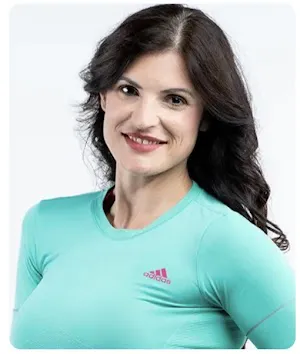
"I work with busy women, pre- and post-menopause, who want to lose fat and balance their hormones. I started my own journey with GFIT and lost 54 pounds while running two jobs, two small kids, and a household — so I can relate to trying to balance your health with everything else on your plate."View Lana's bio →

"You haven't lost discipline. You haven't lost your edge. Your body changed — and the rules of fat loss and strength changed with it. I coach women through this transition every day, and I'm living it myself: preserving muscle, supporting metabolism, and building nutrition and training that work with your hormones, not against them."View Suzanne's bio →
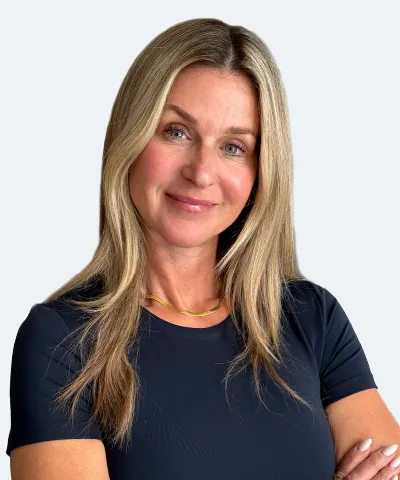
"If you're a woman in your late 30s to 50s and your body suddenly isn't responding the way it used to, you're not imagining it and you're not the problem. Midlife brings real physiological changes — my job is to help you understand what's happening, remove the overwhelm, and build strength and habits that last."View Julie's bio →
Why generic programs fail in perimenopause
One-size-fits-all programs assume every woman responds the same way — and she doesn't. Downloadable plans and social-media advice are built for everyone, which means they're built well for no one.
Our approach at GFIT
At GFIT, we don't coach "women" — we coach your physiology, lifestyle, goals, and stage of life. We look beyond the scale at muscle mass, strength, protein, sleep, stress, routines, medical history, hormonal stage, and recovery capacity — and combine weekly coaching with access to Registered Dietitians, Registered Social Workers, Occupational Therapists, Psychologists, Naturopathic Doctors, and Clinical Counsellors.
50+ registered health professionals. One coordinated plan.
Behind every GFIT coach is a team of 50+ registered health professionals, so your plan is coordinated — not a collection of disconnected appointments. Monthly 1:1 sessions as needed, and most extended health plans reimburse them line-by-line.
Registered Dietitians
Protein, nutrition, meal cadence, and body composition — an approach to eating that fits your life, not a crash plan.
Registered Social Workers
Behaviour change, emotional eating, motivation, and the mental load women carry through midlife.
Occupational Therapists
Routines, sleep, energy management, and habits that make the plan doable in a full life.
Psychologists
Evidence-based mental-health support when deeper clinical care is appropriate.
Naturopathic Doctors
Hormone health, energy, and metabolic markers — coordinated alongside your physician, never replacing them.
Clinical Counsellors
Confidence, identity, emotional wellbeing, and the day-to-day weight of long-term change.
What we do and what we honestly don’t.
We work alongside your medical team, never over them.
What GFIT coaching does
- Weekly 1:1 certified coaching built for midlife physiology
- Monthly 1:1 sessions with RDs, RSWs, OTs, Psychologists, NDs, and Clinical Counsellors
- Progressive strength training that preserves muscle and bone
- Protein-forward nutrition that fits your life stage (RD-led)
- Sleep, stress, and recovery built into the program
- Coverage check across extended benefits, NIHB, VAC, CAF
What we don’t do (and won’t pretend to)
- Prescribe or adjust medications, including hormone therapy (HRT) or GLP-1s
- Diagnose or treat medical or mental-health conditions
- Order or interpret bloodwork or imaging
- Replace your family physician, OB-GYN, or specialist
- Treat diagnosed eating disorders — we refer to clinical care via NEDIC — nedic.ca / 1-866-633-4220
Often covered. Often from more than one part of your plan.
Because GFIT's team includes Registered Dietitians, Registered Social Workers, Occupational Therapists, Psychologists, Naturopathic Doctors, and Clinical Counsellors and each client gets monthly 1:1 sessions with the registered pros relevant to their situation. Many women claim coverage from multiple categories of their extended health plan in the same month. We also work with NIHB, VAC, and CAF benefits.
Check your coverage — free
Answer two quick questions for an instant read on your coverage. No email required.
Rough estimate only — confirmed by your insurer. We never share your info.
Real women. Real change. Built to last.
GFIT has worked with 20,000+ clients and is rated 5.0 stars across 750+ Google reviews.
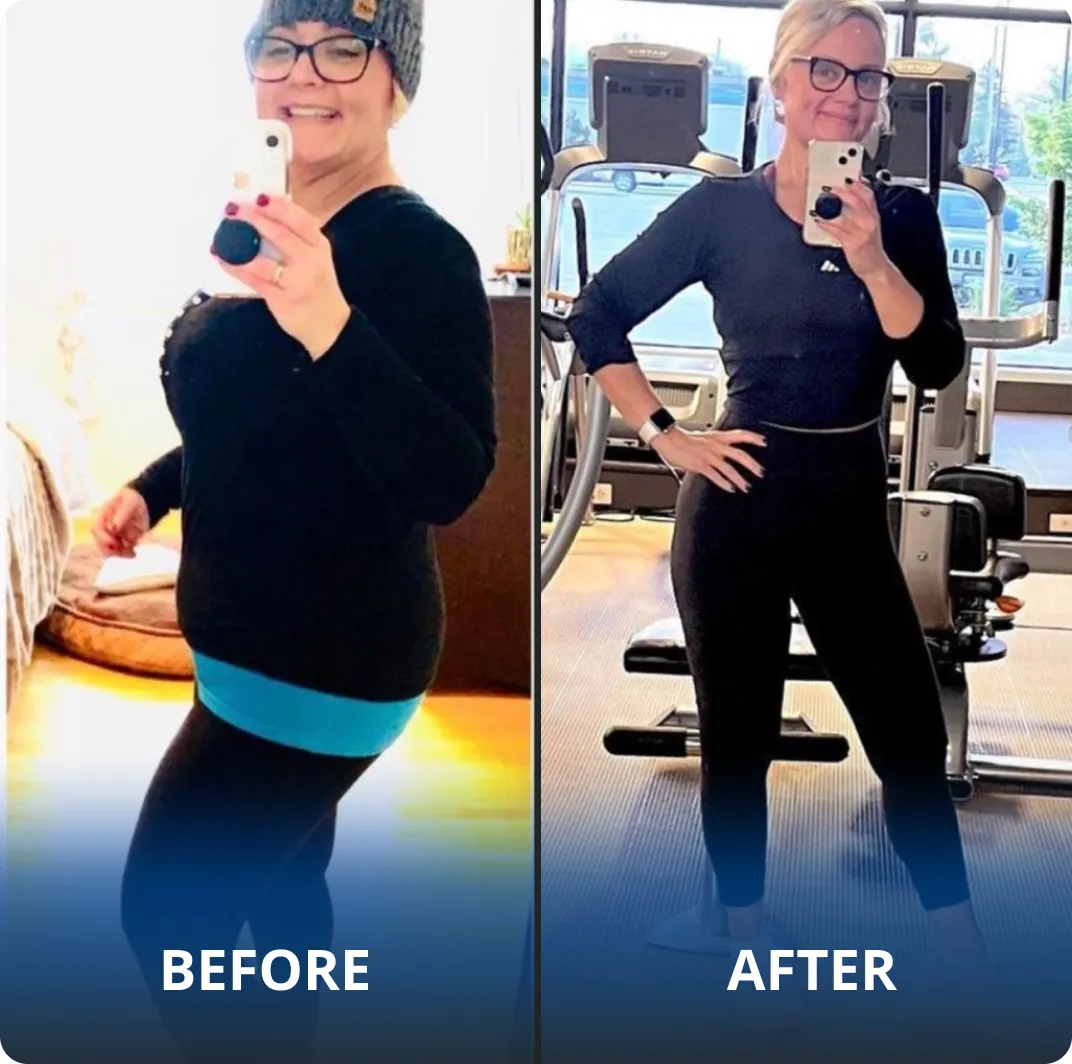
"52 pounds down, but so much more. This journey taught me about mindset, belief, and overcoming fear — and that you can achieve anything you're willing to work hard for. You can do hard things, even in the midst of adversity. You just have to start somewhere."
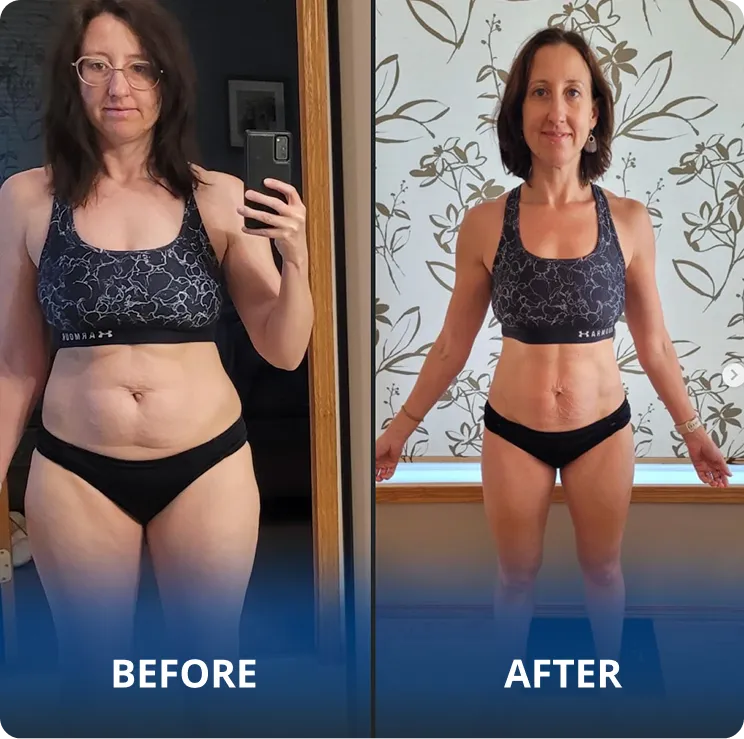
"My coach took my individual needs into account and helped me hold myself accountable while extending myself grace when life got hectic. I've lost the weight, gained strength, and built habits I'll carry forever — 10,000 steps a day, quality protein at every meal, better sleep. I even matched my 10km PR from fifteen years ago."
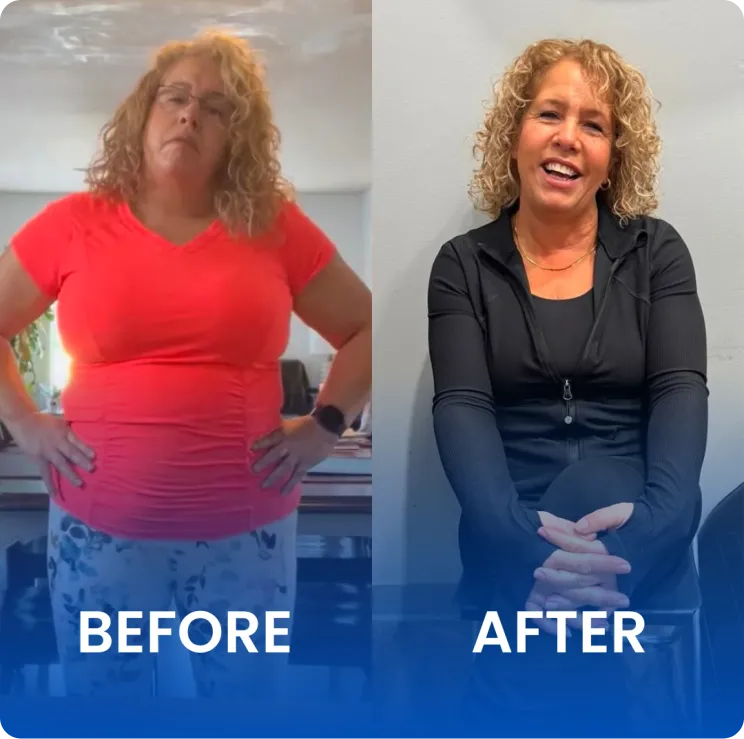
"When I first started I was 188 pounds and facing a health crisis. Today I'm 150 pounds and feeling stronger, healthier, and more alive than I have in years. If you're struggling like I was, please know change is possible. You just have to start."
Individual results vary and are not guaranteed. Photos and quotes shared with permission.
From "nothing's working" to your first plan, usually under two weeks.
Tell us where you are
15 minutes to understand your goals, stage, and life. We check your insurance coverage live.
The right fit for you
You're paired with a coach who specializes in midlife. The registered pros who'll layer in monthly are identified from what your plan calls for.
Training, nutrition & support
Sequenced together and built for your physiology. Your weekly coach is your continuous thread; monthly sessions begin in week 2 or 3.
Frequently asked questions
Why am I suddenly gaining weight during perimenopause?+
Perimenopause affects much more than your menstrual cycle. Fluctuating estrogen, reduced muscle mass, changes in sleep, increased stress, and shifting fat distribution all influence body composition. The encouraging news: it isn't inevitable — with the right combination of strength training, nutrition, recovery, and behaviour change, many women improve their body composition during this stage.
Is it harder to lose weight during perimenopause?+
For many women, yes. The strategies that worked in your twenties and thirties often become less effective because your physiology has changed. Successful fat loss typically requires preserving muscle, increasing protein, improving recovery, managing stress, and following a structured strength-training program — not simply eating less or exercising more.
What causes menopause belly fat?+
Hormonal changes influence where your body stores fat, often shifting it toward the abdomen during perimenopause and menopause. Reduced muscle mass, poor sleep, chronic stress, and decreased daily activity contribute too. The goal isn't just reducing belly fat — it's improving overall body composition through sustainable nutrition and progressive strength training.
Should I do more cardio?+
Cardiovascular exercise remains important for health, but cardio alone is rarely the most effective strategy for body composition in perimenopause. Most women benefit from combining regular walking and cardio with progressive strength training, adequate protein, and sustainable nutrition.
Why is strength training so important in perimenopause?+
Strength training preserves lean muscle, improves bone density, supports metabolic health, increases insulin sensitivity, improves balance, and promotes healthy aging. Rather than simply burning calories, it preserves the muscle that supports long-term metabolic health — and builds confidence and independence.
How much protein do women need during perimenopause?+
Protein needs vary by body size, activity, and goals, but many women entering perimenopause benefit from substantially more than they currently eat — especially when preserving muscle while losing fat. Your Registered Dietitian can set an individualized target.
Do I need Hormone Replacement Therapy (HRT) to lose weight?+
Not necessarily. HRT may help symptoms like hot flashes, sleep disruption, and mood for some women, but it isn't a weight-loss treatment. Many women improve body composition with strength training, nutrition, stress management, and lifestyle habits regardless of HRT. The decision to begin HRT should always be made with your physician.
Can I still build muscle after 40?+
Absolutely. Women can build strength and muscle throughout midlife and beyond. Progress may look different than at 25, but research consistently shows progressive resistance training remains highly effective well into later adulthood.
Is online coaching as effective as in-person personal training?+
For many women, yes. Because your coach follows your progress week after week, adjusts your programming, and supports you through real-life challenges, online coaching often provides greater consistency than occasional in-person sessions.
Is coaching covered by insurance?+
Many clients receive reimbursement through extended health benefits, because monthly appointments with eligible registered health professionals may qualify. GFIT also works with NIHB, Veterans Affairs Canada (VAC), and Canadian Armed Forces (CAF) programs. We review your coverage on your free discovery call.
How do I start?+
Book a free discovery call. We'll talk about where you are, what's changed, what's worked, your goals, your health history, and your coverage — then match you with the right coach. No pressure, no obligation.
Ready to stop fighting your body?
You don't need another restrictive diet or fitness challenge. You need a strategy built for the body you have today. Book a free 15-minute discovery call. No pressure, no obligation.
Book a free discovery call →