
Constipation on GLP-1s: A Nutrition Coach's Step-by-Step Fix
Constipation is one of the most commonly reported GLP-1 side effects after nausea, and it is also one of the most underdiscussed. About 20 to 30% of patients report it in the first 90 days, and for many it persists longer than the initial nausea does. The fix is usually straightforward and does not require stopping the medication. This article walks through why GLP-1s slow the bowel, the step-by-step fix we use with clients, and when to flag it medically.
Here is what you need to know. GLP-1s slow gastric and intestinal motility. The result is slower transit and harder, less frequent bowel movements. The fix is more fibre (25 to 35 grams per day), more hydration (2.5 to 3 litres per day), magnesium supplementation if needed, daily walking, and a small amount of fat in each meal. Most patients see improvement within 2 weeks of addressing all five.
Backed up since starting Ozempic?
Book a free 15-minute consult with our Winnipeg GLP-1 coaching team. We'll review your situation, build a plan, and confirm your insurance coverage on the call.

Why GLP-1s Cause Constipation
The same mechanism that suppresses appetite (slowed gastric emptying) also slows intestinal transit. Food sits in the stomach longer, then moves through the small and large intestines more slowly, too. The longer transit time means more water is absorbed from the stool, which makes it harder to pass.
Compounding factors:
- Reduced food intake means less fibre coming in.
- Reduced fluid intake (because appetite suppression reduces drinking too).
- Reduced physical activity from the energy drops of the first 90 days.
- Lower fat intake than baseline, which the gallbladder responds to less, reducing the bile signal that supports bowel movement.
The Step-by-Step Fix
1. Fibre to 25 to 35 grams per day
Most North Americans eat 12 to 18 grams of fibre per day. On a GLP-1, that drops further because total food volume is lower. Target 25 to 35 grams per day from whole-food sources:
- Berries (5 to 8 grams per cup).
- Pears with skin (5 grams each).
- Apples with skin (4 grams each).
- Beans and lentils (8 to 15 grams per cup cooked).
- Steel-cut oats (5 grams per 1/2 cup dry).
- Ground flax (2.5 grams per tablespoon).
- Chia seeds (5 grams per tablespoon).
- Cruciferous vegetables (3 to 5 grams per cup cooked).
Add fibre gradually over 7 to 10 days. Adding 20 grams overnight causes gas and bloating that is worse than the constipation.
2. Hydration: 2.5 to 3 litres per day
Fibre without water makes constipation worse, not better. Sip water continuously throughout the day, and set timer reminders if needed. Most GLP-1 patients under-hydrate without realizing it because appetite suppression reduces the thirst signal.
3. Magnesium supplementation
Magnesium citrate (200 to 400 mg in the evening) draws water into the colon, softening stool. This is highly effective for GLP-1 constipation and is well tolerated by most patients. Discuss with your physician if you take other medications.
4. Daily walking
Physical activity stimulates bowel motility. 30 minutes of walking per day (continuous or split) measurably helps. The morning walk is most effective for stimulating a morning bowel movement.
5. Include some fat in each meal
A modest amount of healthy fat (a tablespoon of olive oil on salad, half an avocado, a small handful of nuts) at each meal signals the gallbladder to release bile, which supports bowel function. Very low-fat eating amplifies GLP-1 constipation.
6. The kiwi and prune option
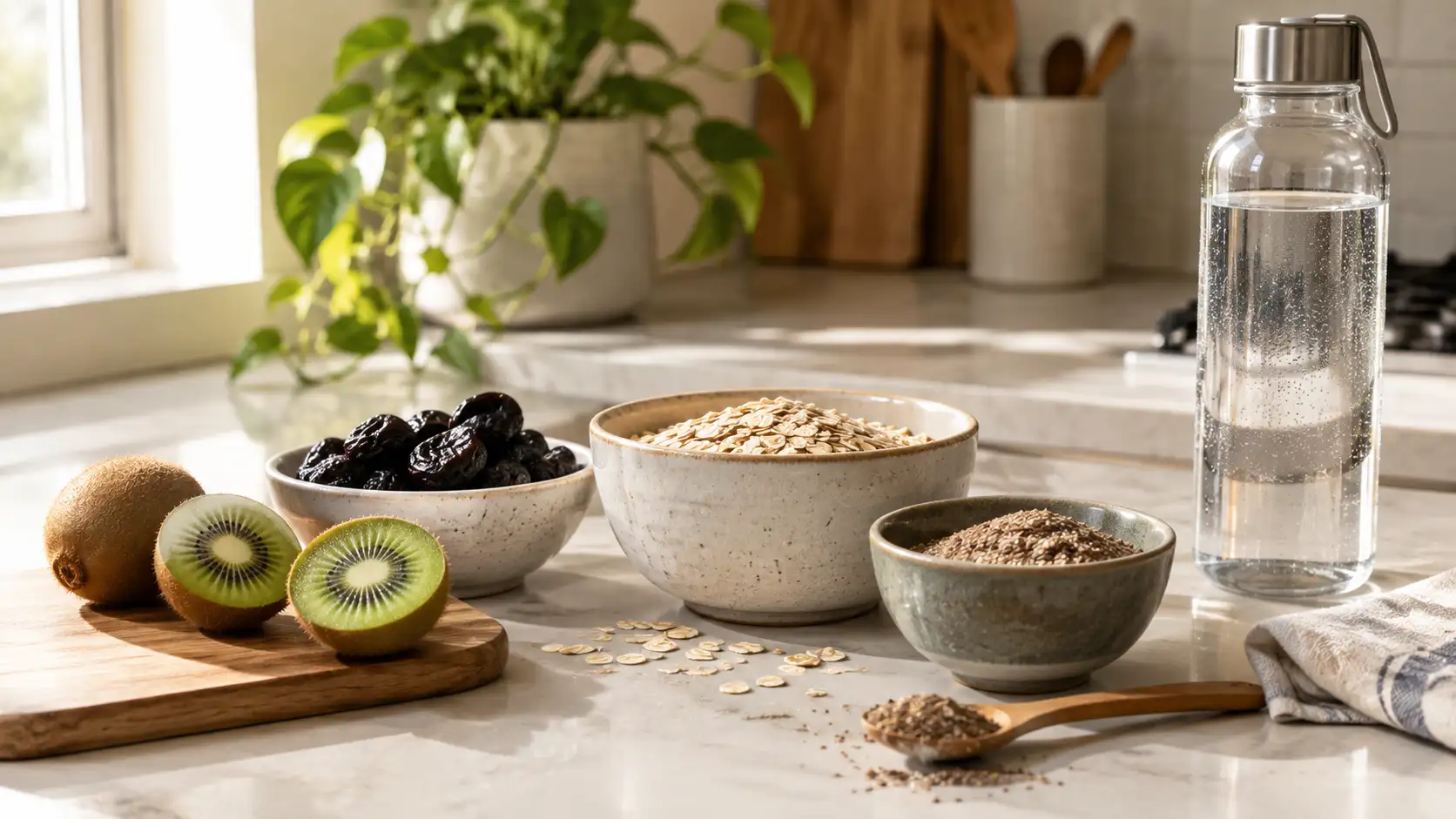
Both have specific evidence beyond their fibre content: two kiwis per day or 4 to 6 prunes per day reliably improve constipation in clinical studies, and are worth trying if the foundations are not enough.
"Constipation is the GLP-1 side effect clients are most embarrassed to bring up and the easiest to fix. We work through fibre, water, magnesium, walking, and a tablespoon of olive oil per meal. Usually resolved in 14 days." — Anna Paulich, GFIT GLP-1 Coach
When to See a Doctor
Most GLP-1 constipation responds to the steps above within 2 weeks. See a doctor if:
- No bowel movement for 5+ days despite the interventions.
- Severe abdominal pain or distension.
- Blood in stool.
- Vomiting alongside the constipation.
- Unintentional weight loss beyond what the GLP-1 explains.
Severe persistent constipation occasionally signals more serious bowel issues that need workup. The threshold for medical evaluation is lower in patients over 50 or with family history of colorectal disease.
One of our Winnipeg clients, Linda, was 6 weeks into Ozempic with bowel movements every 4 to 5 days that were actually painful. We added 25 grams of fibre per day (mostly oats, berries, beans), 3 litres of water, 300 mg magnesium citrate in the evening, and a 30-minute morning walk. Within 8 days she was back to daily bowel movements that were comfortable, and we never had to involve her prescriber.
Want a constipation fix plan that actually works?
Book a free 15-minute consult with our Winnipeg GLP-1 team. We'll walk through your specific case and confirm your insurance coverage on the call.
Frequently Asked Questions
Most patients see improvement within 2 weeks of addressing fibre, hydration, magnesium, walking, and meal fat. Without intervention, GLP-1 constipation often persists for months or until the medication is stopped. The medication does not cause permanent damage. The constipation reflects the active medication effect.
High-fibre whole foods: berries, pears, beans, lentils, steel-cut oats, ground flax, chia seeds, cruciferous vegetables. Two kiwis per day or 4 to 6 prunes per day have specific evidence beyond their fibre content. Include a tablespoon of olive oil or healthy fat in each meal.
Magnesium citrate 200 to 400 mg in the evening is highly effective and well-tolerated by most patients. Discuss with your physician if you take other medications. Magnesium oxide is less well absorbed and produces more cramping. Citrate or glycinate forms are better.
Yes, occasional use is fine. Docusate (Colace) is a gentle option. Senna and bisacodyl are stronger and not for daily use. Long-term reliance on stool softeners is not the right answer. The underlying inputs (fibre, water, magnesium, walking) should be addressed first.
Almost never. The constipation is fixable with the steps above. Stopping a working GLP-1 because of constipation that resolves in 2 weeks of intervention creates worse downstream problems. Work the fixes first; involve your coach and physician if they do not resolve.





Book a call with our Wellness Coordinator to learn more


